
What to Feed a Hamster: Complete Food List & Feeding Guide
Reviewed by Dr. Norma Young.
Working out what to feed a hamster is easier than the long lists online make it look. A healthy hamster diet has four parts: a pellet base, small amounts of fresh food, clean water every day, and treats only now and then.
If your real question is “what do hamsters eat besides pellets?”, that’s where most of this guide goes. I’ve pulled together the verdicts from every one of my single-food guides, so you can see which foods are safe, which are occasional, and which never belong in the cage.
You’ll also find the rules that change for dwarf hamsters, a simple routine for introducing new foods, and the signs that a food isn’t agreeing with your pet.
What to Feed a Hamster: Daily Diet at a Glance
What to feed a hamster comes down to four things: a good-quality hamster pellet as the daily base, small portions of fresh vegetables, the odd piece of fruit or protein, and fresh water in a sipper bottle every day. Treats stay occasional, and portions are smaller for dwarf hamsters.
Here’s how the food groups fit together. Each one has its own section further down, with a full food list.
| Food group | Role in the diet | How often | Where to read more |
| Base food (pellets) | The foundation. Covers the nutrients a hamster needs in every bite. | Every day. Share of the diet: About 80% of the diet | How to take care of a hamster |
| Fresh vegetables | Variety, fiber and a little extra moisture | Every day | Safe vegetables section below |
| Treats | A small extra, not a second meal | No more than 10% of the diet | Treats section below |
| Fruit | An occasional sweet extra | Once or twice a week | Safe fruits section below |
| Seeds and nuts | Rich extras that hamsters love to forage for | Once or twice a week | Seeds, nuts, grains and protein section |
| Protein | Plain cooked egg, lean meat or insects in small amounts | 2–3 times a week | Seeds, nuts, grains and protein section |
| Water | Essential for every hamster | Fresh every day | How long can hamsters go without water? |
Hamsters are natural hoarders. Pet hamsters stuff pellets into corners, under bedding and inside hideouts, just like wild hamsters fill their burrows. That stash is a backup, not a meal plan, so keep the food dish stocked every day.
If you’re going away or wondering how long that stash would really last, my guide on how long can hamsters go without food explains the risks.
Fresh water every day
Water matters more than any single food on this page. Offer it in a sipper bottle, which my water guide recommends over a bowl, and change the water every day.
Check that the bottle actually works, not just that it looks full. An airlock in the tube can stop the flow while the bottle still appears untouched. Clean the bottle and its metal tube regularly. Cleaning schedule: once a week.
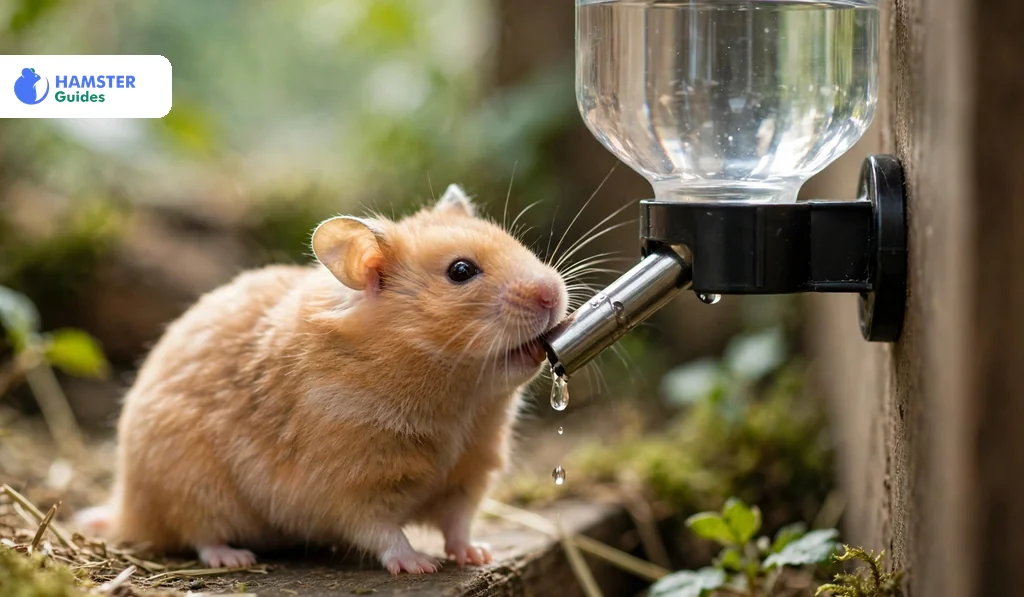
Check the Bottle: Check the bottle actually works, not just that it looks full. An airlock in the tube can stop the flow while the bottle still appears untouched.
Pellets and Seed Mixes: The Base of a Hamster’s Diet
Pellets are the one part of the diet you never skip. A good hamster pellet is made to deliver balanced nutrition in every piece, which is something no single fresh food can do.
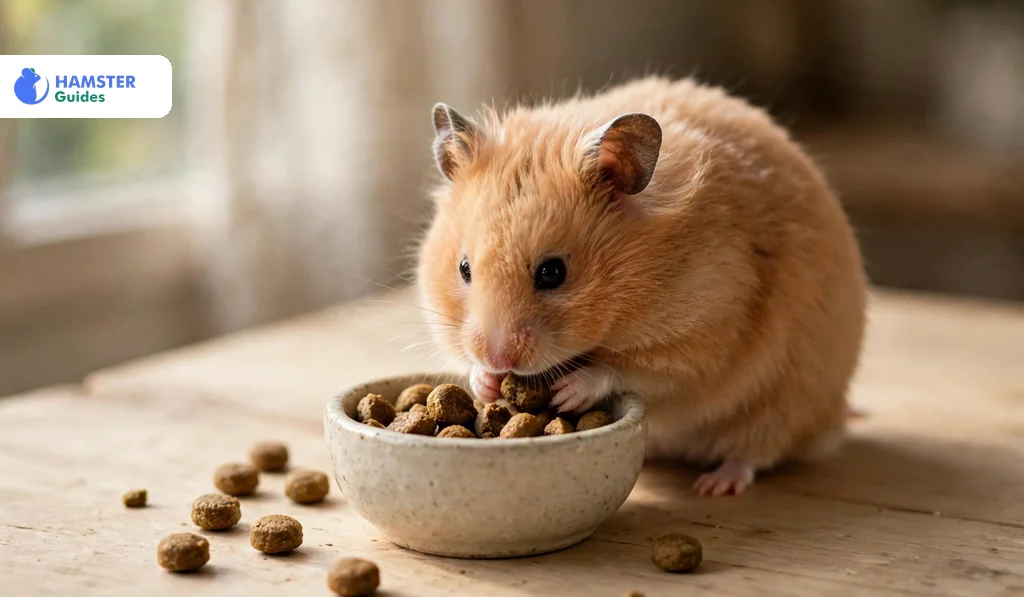
When you compare bags in the store, read the label. Look for:
If you keep a dwarf hamster, check the sugar as well. My Campbell’s dwarf guide recommends a food with less than 10% sugar, because these hamsters are genetically predisposed to diabetes.
How much to give each day depends on the breed. Daily pellet amount for Syrian hamsters: 1 to 2 tablespoons a day (about 10–12 g). Daily pellet amount for dwarf hamsters: 1 to 2 teaspoons a day (about 6–8 g).
What about seed mixes?
Seed-only mixes are where many new owners go wrong. Hamsters pick out the tasty seeds and leave the rest. This is called selective feeding, and it means your pet misses out on nutrients.
Whether a mixed seed-and-pellet food can serve as the daily base, or whether pellets alone are the better choice: Pellets alone are the better choice — a mixed seed-and-pellet food only works if your hamster eats the pellets too, and most hamsters pick out the seeds and leave the pellets behind.
Run out of hamster food? Bird seed isn’t a stand-in. A few plain seeds can work as a treat, but bird mixes are often high in fat and never replace pellets. Can hamsters eat bird food? covers which seeds are fine and which to skip.
Safe Vegetables for Hamsters
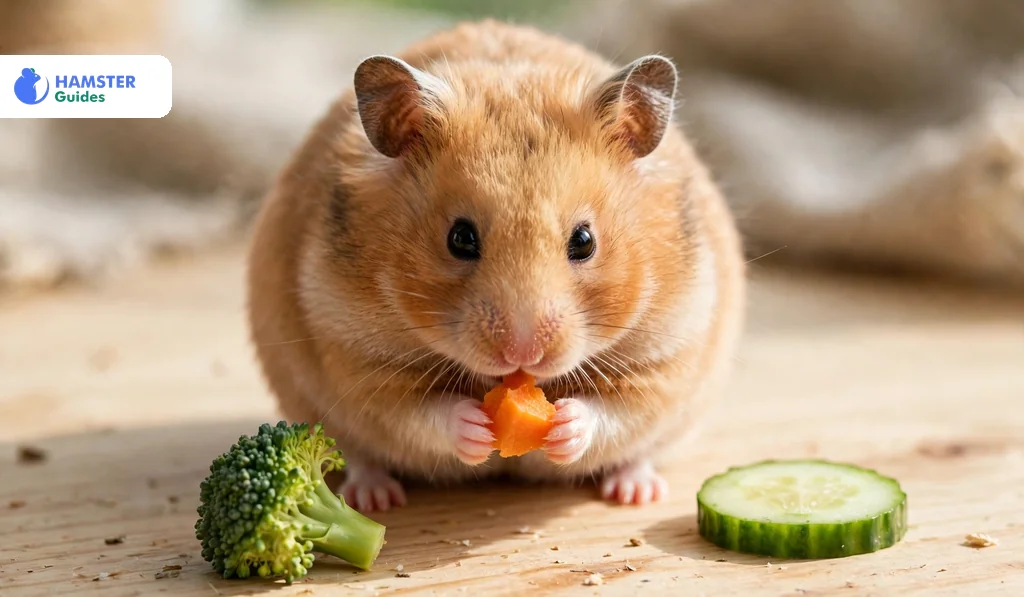
So, what can hamsters eat besides pellets? Vegetables are the biggest fresh-food group, and safe foods for hamsters start here. Most common kitchen vegetables are fine in small portions.
Three habits apply to every vegetable: wash it well, cut it small, and take away anything uneaten before it spoils. The table lists the verdict from each of my guides. How often to serve each vegetable is still being finalized, so check the full guide before you settle on a routine.
| Vegetable | My verdict | Prep note | Full guide |
| Carrots | Safe in moderation | See full guide | Can a hamster eat carrots? |
| Broccoli | Yes, in strict moderation | See full guide | Can hamsters eat broccoli? |
| Radish | Yes, as an occasional extra | Root only, washed well. Not a first vegetable. | Can hamsters eat radish? |
| Green beans | Yes, in moderation | See full guide | Can hamsters eat green beans? |
| Cucumber | Yes | Wash well. The seeds are soft and safe. | Can hamsters eat cucumber? |
| Zucchini | Yes, in moderation | Never frozen. See full guide. | Can hamsters eat zucchini? |
| Bell peppers | Yes, in strict moderation | Wash, then remove all seeds and the stem | Can hamsters eat bell peppers? |
| Other peppers | Sweet peppers are fine; other types vary | See full guide | Can hamsters eat peppers? |
| Kale | Depends on breed | Soft leaf edges only. No stem or thick ribs. | Can hamsters eat kale? |
| Cabbage | Yes, as an occasional treat | Wash the leaves well and tear them small | Can hamsters eat cabbage? |
| Bok choy | Yes, in moderation | Rinse well. Leaves rather than thick stems. | Can hamsters eat bok choy? |
| Cauliflower | Yes, in moderation | Wash carefully. Leaves are also fine. | Can hamsters eat cauliflower? |
| Asparagus | Yes, in moderation | Clean, small pieces. No seasoning. | Can hamsters eat asparagus? |
| Arugula | Yes, in moderation | Wash well. Remove uneaten pieces. | Can hamsters eat arugula? |
| Celery leaves | Yes, as a snack, not a meal | Wash the leaves. Remove tough stalks. | Can hamsters have celery leaves? |
| Sugar snap peas | Yes, as an occasional treat | Peas out of the pod. No canned or seasoned peas. | Can hamsters eat sugar snap peas? |
| Snow peas | Yes | Wash well and cut small | Can hamsters eat snow peas? |
| Sweet potatoes | Yes, prepared properly | Plain and cooked. See full guide. | Can hamsters eat sweet potatoes? |
| Tomatoes | Limited, see full guide | See full guide | Can hamsters eat tomatoes? |
Variety matters more than any single vegetable. Rotating a few safe options gives your hamster a wider mix of nutrients and keeps mealtimes interesting.
Romaine lettuce is also listed as safe in my Food Safety Checker, even though it doesn’t have its own guide yet.
Three Habits: Three habits apply to every vegetable: wash it well, cut it small, and take away anything uneaten before it spoils.
Safe Fruits for Hamsters (Small Amounts Only)
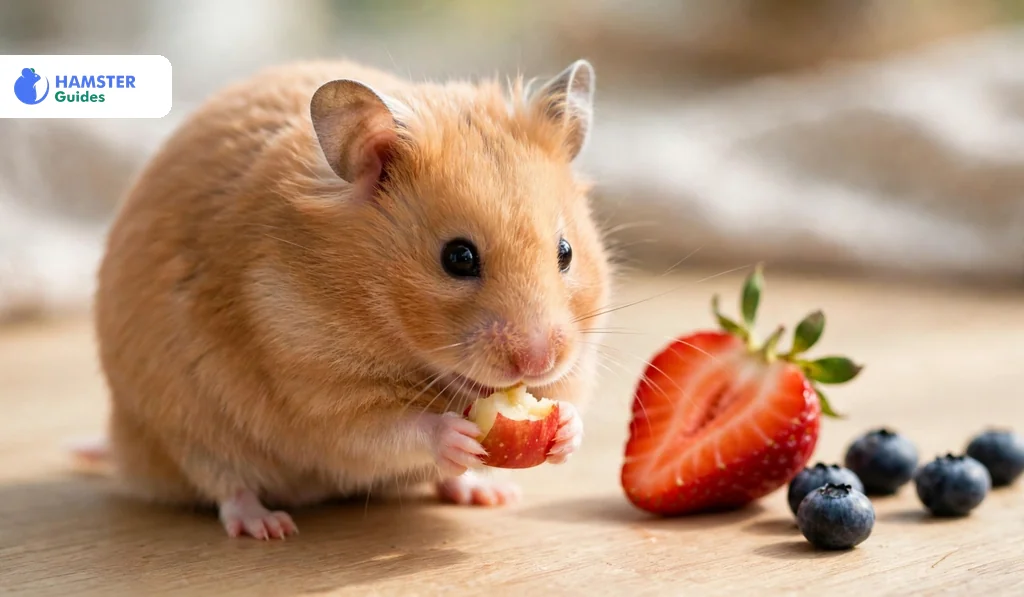
Fruit is a treat, not a staple. Most fruits are safe foods for hamsters in tiny amounts, but they’re high in natural sugar.
My Food Safety Checker notes that dwarf hamsters are more prone to diabetes and need stricter sugar limits. If you have a dwarf, keep fruit even rarer.
Two prep rules cover almost every fruit: wash it, and remove all pits and seeds. Cherry, plum and peach pits and apple seeds contain cyanide compounds, so they come out every time.
| Fruit | My verdict | Prep note | Full guide |
| Apples | Yes, in very strict moderation | Flesh only. No seeds or core. | Can dwarf hamsters eat apples? |
| Plums | Yes, as an occasional treat | Remove all pits and seeds | Can hamsters eat plums? |
| Blueberries | Yes, in strict moderation | Wash well. Remove any uneaten berry. | Can hamsters eat blueberries? |
| Strawberries and leaves | Yes, as an occasional treat | Wash. Clean leaves are safe too. | Can hamsters eat strawberry leaves? |
| Pears | Yes, in moderation | No seeds. Skip the leaves. | Can hamsters eat pears? |
| Peaches | Yes, as an occasional treat | Fresh and ripe, pit removed. No canned or dried. | Can hamsters eat peaches? |
| Nectarines | Syrians, in very strict moderation | Pit removed. See guide for dwarfs. | Can hamsters eat nectarines? |
| Apricots | Yes, as an occasional treat | Fresh only, pit removed. No canned. | Can hamsters eat apricots? |
| Cherries | Yes, as an occasional treat | Remove stems and pits | Can hamsters eat cherries? |
| Blackberries | Yes, as an occasional treat | Wash well | Can hamsters eat blackberries? |
| Kiwi | Yes, in moderation | See full guide | Can hamsters eat kiwi? |
| Pineapple | Yes, fresh and in very small amounts | Fresh only. Remove all skin and core. | Can hamsters have pineapple? |
| Papaya | Yes, with care | Remove every seed | Can hamsters eat papaya? |
| Melon | Yes, in tiny amounts | Remove all seeds and the rind | Can hamsters eat melon? |
| Honeydew | Yes, with care | See full guide | Can hamsters eat honeydew? |
| Pomegranate | Yes, in small quantities | Seeds only. No peel. | Can hamsters eat pomegranate? |
| Coconut | Yes, as an occasional treat | Unsweetened fresh meat or flakes only | Can hamsters eat coconut? |
Dried fruit
Drying concentrates the sugar in fruit, and my guides don’t yet agree on where dried fruit fits. Until that’s settled, check the full guide before you offer either of these:
Citrus fruits and raisins need extra caution. Read my guides on Can hamsters eat tangerines?, Can hamsters eat mandarin oranges? and Can hamsters eat raisins? before offering any.
Seeds, Nuts, Grains and Protein
Hamsters are omnivores. In the wild they forage for seeds, grains and insects, so a little of each belongs in a pet hamster’s diet too.
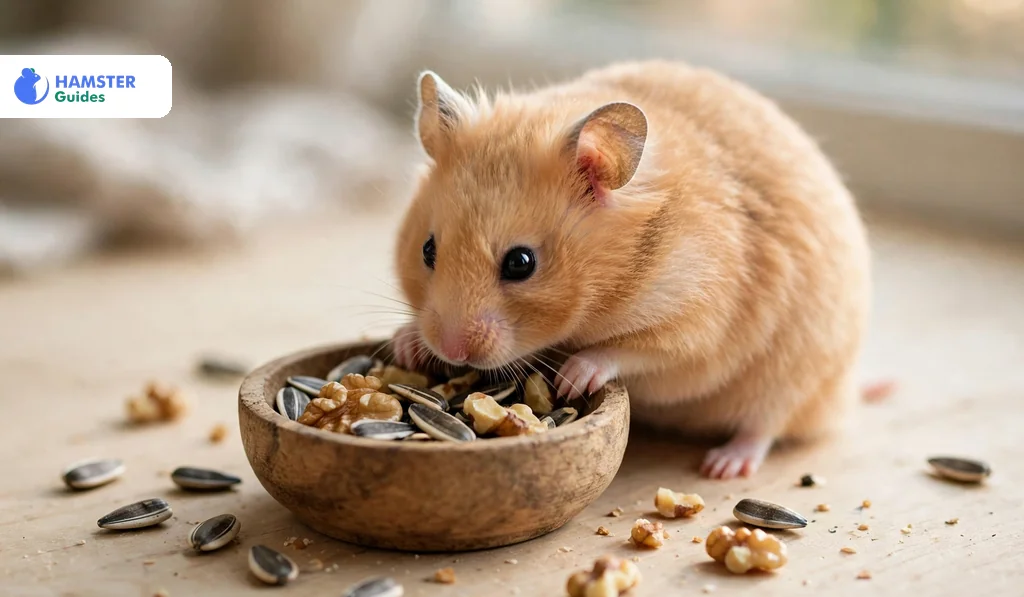
The catch is fat. Most nuts are very rich, which makes them an occasional extra rather than a daily handful. The prep rules are the same across my guides: plain, unsalted and unseasoned, and shelled where the guide says so. Sharp shell pieces, especially from pistachios, can hurt a hamster’s cheek pouches.
How often to offer seeds and nuts: Once or twice a week.
| Food | My verdict | Prep note | Full guide |
| Sunflower seeds | Yes, in small amounts (high in fat) | Plain and unsalted | Can hamsters have sunflower seeds? |
| Walnuts | Yes, in very strict moderation | See full guide | Can hamsters have walnuts? |
| Hazelnuts | Yes, as a very rare treat | Raw and unsalted. See guide for dwarfs. | Can hamsters eat hazelnuts? |
| Pecans | Yes, as an occasional treat | Shelled, unsalted and unseasoned | Can hamsters eat pecans? |
| Pistachios | Yes, in strict moderation | Raw and unsalted. Always shelled. | Can hamsters eat pistachios? |
| Cashews | Yes, as an occasional treat | Unsalted. See full guide. | Can hamsters eat cashews? |
| Macadamia nuts | Yes, as an occasional treat (high in fat) | Shell removed | Can hamsters eat macadamia nuts? |
| Roasted peanuts | Yes, as an occasional treat | Unsalted and unseasoned | Can hamsters eat roasted peanuts? |
| Oats | Yes, in moderation | Plain rolled oats. Cool cooked oats fully. | Can hamsters eat oats? |
Protein
A little animal protein supports growth and energy. Stick to plain, fully cooked foods or insects that were bred for pet food.
Never feed insects caught in your garden or yard. My grasshopper guide explains that wild ones can carry parasites and pesticides. How often to offer protein: 2–3 times a week.
| Food | My verdict | Prep note | Full guide |
| Scrambled eggs | Yes, in limited amounts | Fully cooked and plain. Never raw or fried. | Can hamsters eat scrambled eggs? |
| Turkey | Yes | Fully cooked, unsalted breast. No deli meat. | Can hamsters eat turkey? |
| Crickets | Yes, for variety | Plain, with no seasoning or additives | Can hamsters eat crickets? |
| Grasshoppers | Yes | Commercially bred only, never wild-caught | Can hamsters eat grasshoppers? |
| Cheese | Only as a special treat | See full guide | What kind of cheese can hamsters eat? |
Treats: How Often and How Much
Treats are the fun part of feeding a hamster, and they’re also where most weight problems start. Think of them as a small extra on top of a balanced diet, never a swap for pellets or vegetables.
Recommended treat share of the overall diet: no more than 10% of the diet.
A few treat ideas from my guides:
Honey comes up a lot too, but my guidance on it is still being reviewed, so read Can hamsters have honey? before offering any.
Skip anything salty, sugary or sticky that was made for people. And if your hamster starts leaving its pellets because it’s waiting for treats, that’s your cue to cut back.
Treats Cue: If your hamster starts leaving its pellets because it’s waiting for treats, that’s your cue to cut back.
Foods Hamsters Should Never Eat
Some foods are off-limits however small the piece. Every one of my pages that covers the foods below agrees they’re unsafe for hamsters.
| Food | Why it’s unsafe | Full guide |
| Onion | Toxic in every form: raw, cooked, powdered or fried | Can hamsters eat onion? |
| Garlic | Toxic in all forms, including garlic-flavored foods | Can hamsters eat garlic? |
| Leeks and chives | Part of the same toxic allium family as onion and garlic | – |
| Avocado | Contains persin, a natural toxin, and is extremely high in fat | Can hamsters eat avocados? |
| Lemons and limes | Far too acidic for a hamster | Can hamsters eat lemon? |
| Chocolate and caffeine | Toxic to hamsters | – |
| Alcohol | Highly toxic | – |
| Raw potato and sprouts | Contain solanine, a toxic compound | Can hamsters eat raw potatoes? |
| Apple seeds and fruit pits (cherry, plum, peach) | Contain cyanide compounds | – |
| Tomato leaves and stems | Toxic parts of the tomato plant | – |
| Rhubarb | Contains oxalic acid | – |
| Pickles | High in salt and acidic vinegar | Can hamsters have pickles? |
| Butter | Very high in saturated fat | Can hamsters eat butter? |
| Sticky or sugary human treats | Not suitable for a hamster’s diet | – |
If your hamster eats any of these, stop the food and contact an exotic-animal vet, even if your pet seems fine. Don’t try to treat it at home.
What Do Dwarf Hamsters Eat? Syrian vs Dwarf Differences
What do dwarf hamsters eat? The same food groups as Syrians: pellets, vegetables, a little fruit, seeds and protein. The differences come down to portion size and sugar.
In this guide, I treat Roborovski hamsters as dwarfs and apply the stricter rules to them. Some of my single-food guides group Robos with Syrians for certain foods, so always read the full guide for the food you’re checking.
I don’t list per-food breed rules here, because the right amount changes from food to food. Each food guide in the tables above has its own breed advice. For everything else about your hamster, start with its breed guide:
| Breed | Key diet point from my breed guide | Breed guide |
| Syrian | The largest common breed. Needs a quality pellet base sized for it. | Syrian hamster |
| Campbell’s dwarf | Predisposed to diabetes. Needs a low-sugar diet. | Campbell’s dwarf hamsters |
| Winter White | Sugary and high-fat foods raise the risk of diabetes and obesity | Winter white hamsters |
| Roborovski | Treated as a dwarf in this guide. Eats pellets, seed mix and insects. | Roborovski dwarf hamster |
| Chinese | Fresh vegetables, some fruit and a quality hamster mix, with clean water daily | Chinese hamster |
How to Introduce a New Food?
A hamster’s stomach doesn’t like surprises. Go slowly with anything new, even a food from my safe lists.
Baby hamsters need a different approach. Under 3 weeks old, pups live on their mother’s milk. After weaning at around 3 to 4 weeks, you can start with soft, mild vegetables.
Not sure how old your hamster is? My hamster age calculator can help.
What to Watch for After a New Food?
Most hamsters handle a new food without any fuss. Still, keep a closer eye on your pet after a first taste. Signs that a food isn’t agreeing with your hamster include:
If you notice any of these, stop the food and contact an exotic-animal vet. When to call: Call the vet the same day if you see watery diarrhoea or a wet, soiled rear end, if your hamster stops eating or drinking for a day, or if it turns lethargic, hunched, or cold.
Don’t try home remedies or human medicines. Leave the treatment to the vet, and tell them which food your hamster ate and when.
Check Any Food with My Food Safety Checker
Wondering about a food that isn’t on this page? Look up any food in my hamster food safety checker.
Type in the name and you’ll get a color-coded safety rating. It covers Syrian, Roborovski, Campbell’s dwarf, Russian dwarf and Chinese hamsters. Check any food in seconds before it goes in the food dish.
Summary: What to Feed a Hamster Every Day
Feeding a hamster is not complicated once the daily base is right: pellets do the heavy lifting, fresh vegetables add variety, and everything else is a small, regular extra.
Non-negotiable daily checklist:
- Pellets as the base, about 80% of the diet — Syrian hamsters 1 to 2 tablespoons a day (about 10–12 g), dwarf hamsters 1 to 2 teaspoons a day (about 6–8 g).
- Fresh vegetables every day.
- Fresh water every day in a clean bottle.
Weekly:
- Fruit once or twice a week.
- Seeds and nuts once or twice a week.
- Protein 2–3 times a week.
- Treats no more than 10% of the diet.
- Clean the bottle and tube once a week.
- Introduce one new food at a time and watch for 24 to 48 hours.


Leave a Reply