
Can Hamsters Eat Bell Peppers?
Many pet owners preparing a fresh salad ask can hamsters have bell peppers as a crunchy snack? The direct answer is yes, hamsters can safely eat raw bell peppers in strict moderation.
These crisp vegetables contain absolutely zero capsaicin, making them entirely safe and non spicy for small rodents. However, the color of the pepper dictates its sugar content, meaning you must choose carefully based on your specific hamster breed.
This complete guide breaks down the critical difference between red and green peppers, the exact micro-portions required, and how to prepare them to avoid dangerous digestive upset.
Can Hamsters have Bell Peppers?
Bell peppers are safe and healthy for your hamsters. Since they are a great source of antioxidants, they contribute to healthy cells and help your hamsters live their best lives.
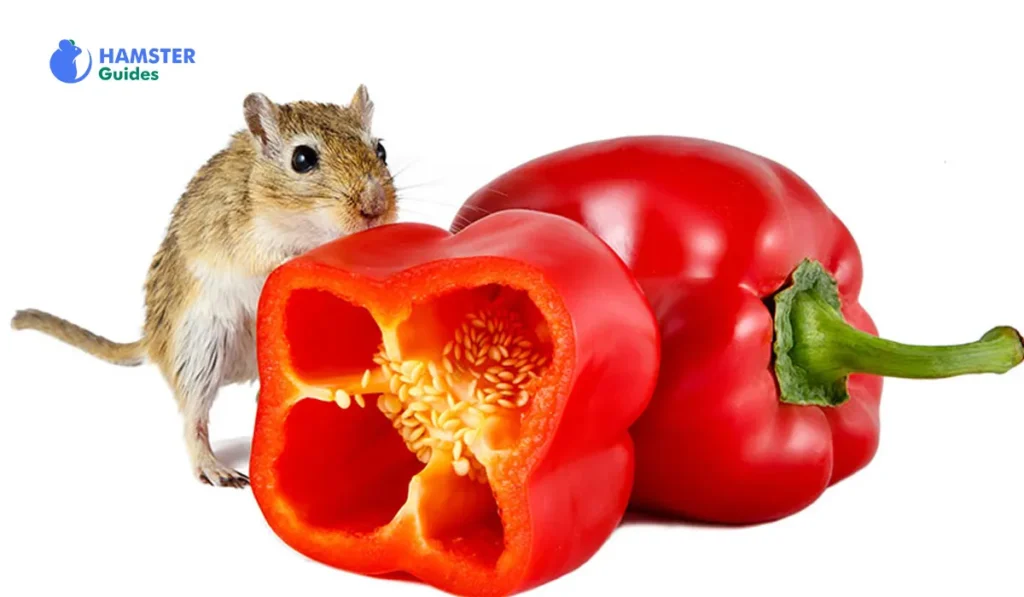
More than this, bell peppers are usually a favorite with hamsters. But it should be limited to a savory supplement to their usual diet.
Read more: Can Hamsters Eat Crickets?
Red vs. Green: Which Color is Safest?
Not all bell peppers are created equal when it comes to small animal nutrition. The color of the vegetable directly correlates to its ripeness and natural sugar levels.
- Green Bell Peppers: These are harvested early and contain the lowest amount of sugar. Green is the absolute safest choice for dwarf hamster breeds like Campbell’s and Chinese hamsters that are genetically prone to diabetes.
- Yellow and Orange Peppers: These are moderately ripe and contain medium sugar levels. They are safe for larger Syrian hamsters as an occasional treat.
- Red Bell Peppers: These are fully ripened and contain the highest concentration of fructose. While packed with Vitamin C, red peppers should be strictly limited and treated like a sweet fruit rather than a standard vegetable.
The Reason Why Moderation Is Essential
Since bell peppers contain high amounts of water, fiber, and sugar, they are not recommended in high amounts for hamsters. It can cause digestive issues in hamsters of all species.
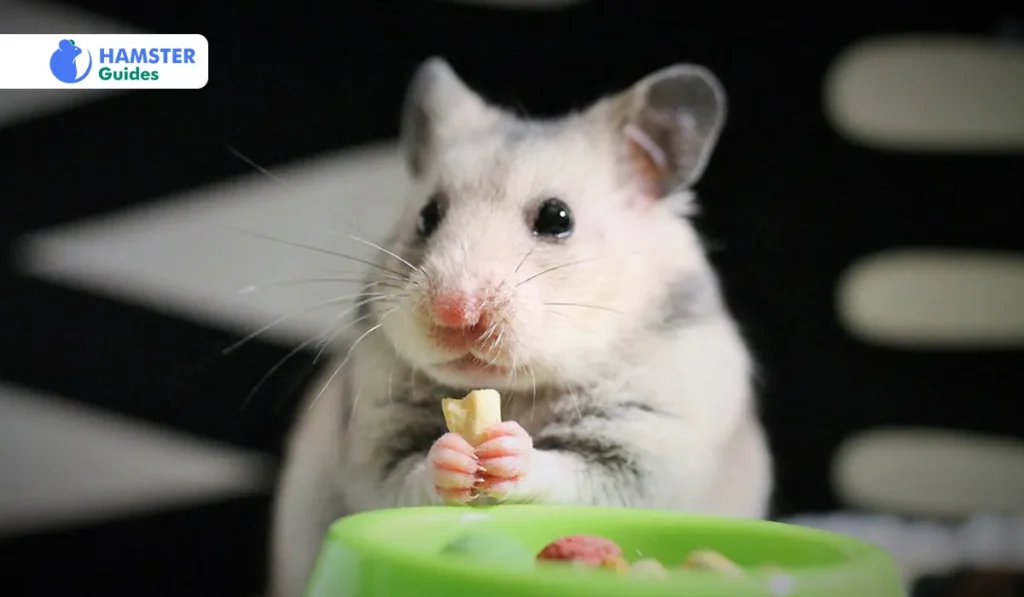
Moreover, a high amount of water can trigger diarrhea in hamsters if given a significant amount in one sitting. Diarrhea further leads to dehydration, which can prove fatal sometimes.
Additionally, being high in phosphorus and low in calcium, bell peppers can be detrimental. Not always, but in some situations, hamsters can be allergic to bell peppers.
Additional Tip: Wash them well and offer small, bite-sized pieces. Monitor your hamsters’ intake to ensure they don’t overeat.
Nutritional Facts of Bell Peppers
Bell peppers can be a safe and nutritious hamster treat in moderation. Here are some nutritional facts about bell peppers.
| Nutritional Facts | Per 100 grammes |
| calories | 31 |
| protein | 1g |
| carbs | 6g |
| sugar | 4.2g |
| fiber | 2.1g |
| fat | 0.13g |
| Vitamin C | 142mg |
| Calcium | 6mg |
Safety and Benefits of Bell Peppers for Hamsters
Many owners worry that peppers will burn their pet’s mouth. Unlike jalapeños or chili peppers, bell peppers score a flat zero on the Scoville heat scale. They completely lack capsaicin, the chemical compound that produces a burning sensation, making them wonderfully sweet, crunchy, and perfectly safe for your furry friend to pouch.
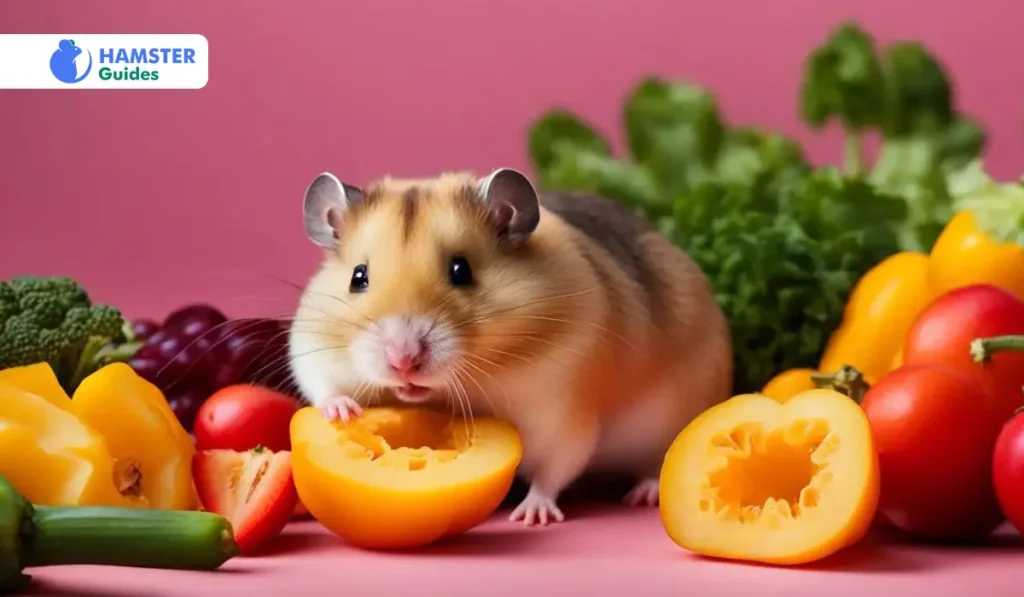
Bell peppers are rich in nutrients that help your little hammies grow and maintain their well-being. Mentioned below are certain significant nutrients that make bell peppers healthy and safe.
| Nutrients | Benefits |
| Water content | Bell peppers are mostly water; therefore, they can serve as an excellent hydrating snack. |
| Vitamins | Being low in fat, they benefit hamsters’ overall health. Another benefit of bell peppers is their antioxidants. Antioxidants help them prevent chronic diseases. |
| Fiber | They contain fiber that helps hamsters work their digestive systems well. |
| Low in fat | Being low in fat, they benefit hamsters’ overall health. Another benefit of bell peppers is their antioxidants. Antioxidants help them prevent chronic diseases. |
| Low in Calories | Being low in Calories, they are suitable for little hamsters prone to gaining weight and everything that comes with obesity. |
| Potassium | Pepper potassium supports healthy blood pressure and fluid balance. |
The Bell Pepper Seed Rule: Unlike apple or cherry pits, bell pepper seeds are not toxic or poisonous. However, you must still meticulously remove all seeds and the tough green stem before feeding. The flat, slippery seeds provide zero nutritional value and pose a severe choking hazard for a tiny rodent’s narrow esophagus.
Do Hamsters Like Bell Peppers?
Being sweet, crunchy, and juicy, bell peppers give hamsters a tasty treat. The texture of fresh and crisp bell peppers can appeal to hamsters.
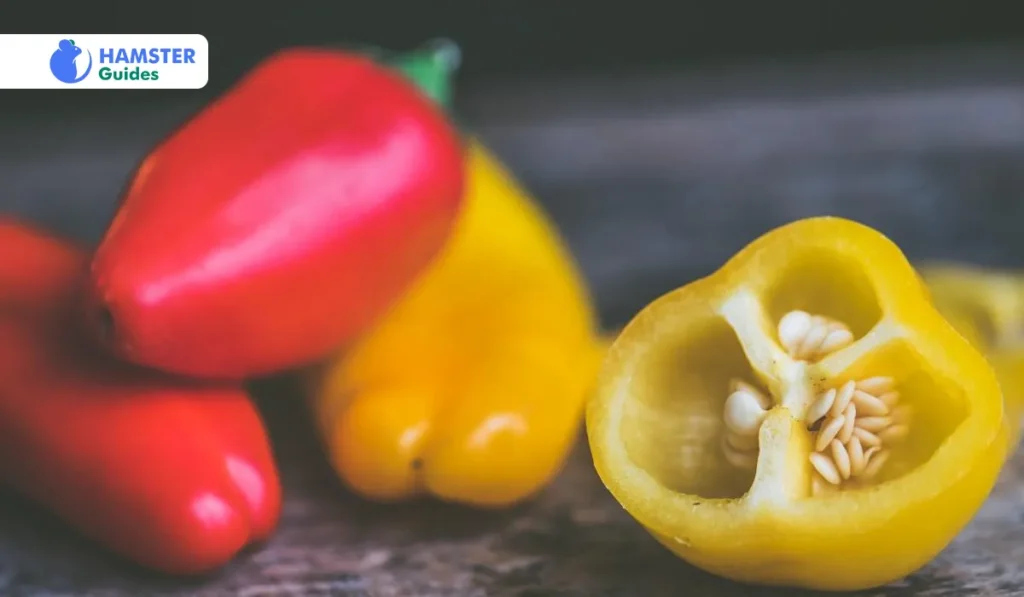
Moreover, its crunchiness provides a satisfying texture for them to chew on; it is delightful and keeps their teeth healthy. The perfect combination of taste and texture makes them a popular choice among hamsters.
Related Resource: Can Hamsters Eat Cashews?
How Much and How Often Can Hamsters Have Bell Peppers?
Since giving a high amount of peppers can be deadly to your hamsters, people often ask, ‘How much and how frequently can hamsters have bell peppers?’
These colorful and sweet veggies might be a fantastic introduction to the lovely side of life. However, bell peppers, containing sugar, can cause diabetes and obesity in your little hammies.

Give them a tiny piece, about a half-inch square. Keep a watch on them for any indications of discomfort during the next twelve hours. The next time, you can give them the whole 1-inch square of bell pepper if nothing strange occurs. Give them 1-2 small pieces, just 2-3 times weekly. Moreover, remember to remove any uneaten items from their cage after an hour or so to avoid spoilage.
In my veterinary practice, I frequently treat hamsters suffering from severe diarrhea caused by watery vegetables. Owners often mistake this for the deadly “wet tail” bacterial infection. I always advise my clients to carefully manage water dense snacks. If you feed your pet a wet slice of bell pepper, you must absolutely avoid giving them cucumber or lettuce on that same day. Stacking high water vegetables overwhelms their tiny digestive tracts and instantly triggers dangerous loose stools.
Can Dwarf Hamsters Have Bell Peppers?
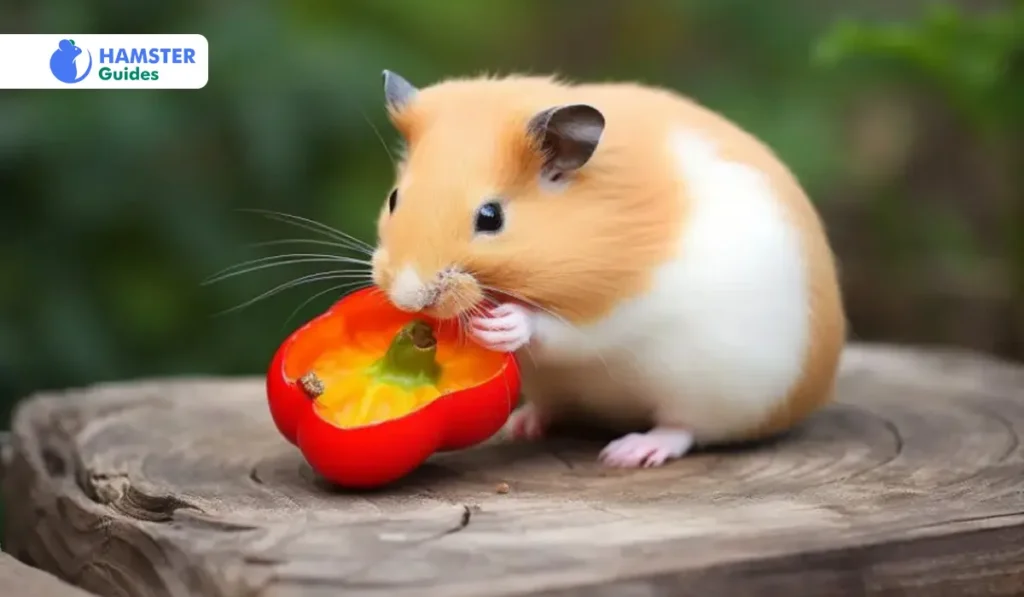
Can dwarf hamsters have bell peppers?’ is another question of great significance. When it comes to smaller hamsters of the dwarf variety, cut a teaspoon in half and give them no more than half a teaspoon of bell peppers. The rest of their diet must contain commercial hamster food and hay.
Can a Baby Hamster Eat Bell Peppers?
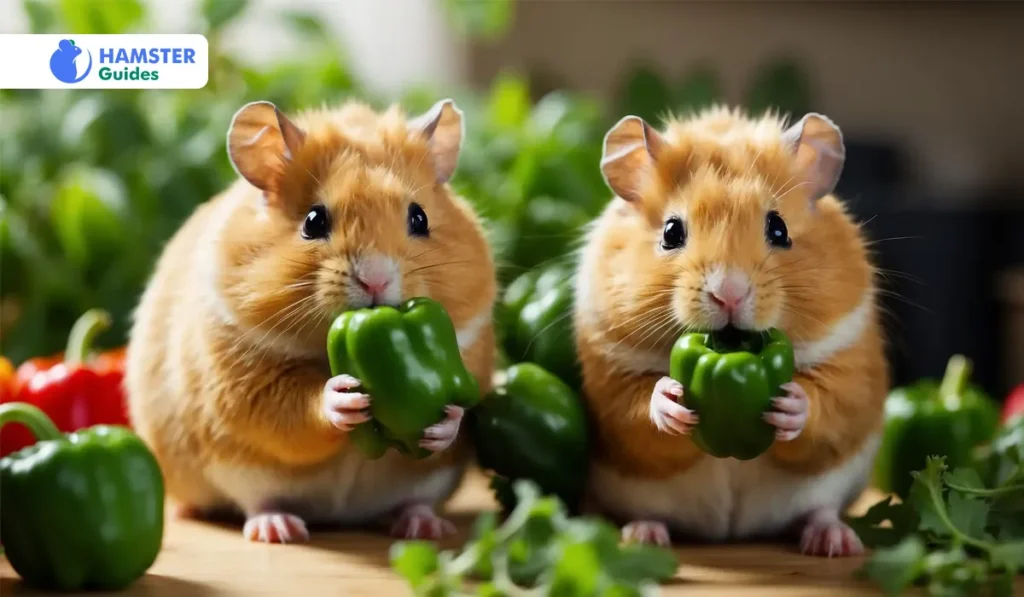
Usually, it is recommended not to give bell peppers to baby hamsters. For them, even a tiny bite can lead to some severe internal issues that can often prove fatal.
Important Information: If your hamster has diarrhea, do not try to rehydrate it with plain water; it will make the situation worse. Seek a product, particularly for rehydrating hamsters, available at your pet store or veterinarian.
Other Healthy Alternatives to Bell Peppers

To produce a wide variety of healthy and balanced diets, take the following foods into account:
The Final Words
Bell peppers are unlikely to cause illness in your hamsters. However, overfeeding even any fresh food, including bell peppers, can upset their stomach and lead to hamster diarrhea or sometimes obesity. Therefore, it is better to be cautious and give them limited food, whether bell pepper or so, to avoid health hazards than to put them at risk.
Hope your hamster enjoys its meal!


Leave a Reply