

Can Hamsters Eat Cucumber?
Pet owners looking for a hydrating summer snack frequently ask can hamsters eat cucumber safely? The direct answer is yes, hamsters can eat both the flesh and the dark green skin of a cucumber.
However, because this vegetable is composed of over 95% water, you must heavily restrict their portion sizes.
While it is a fantastic, low-calorie treat, feeding too much watery vegetable to a tiny desert rodent will overwhelm their digestive system and trigger highly fatal diarrhea known as wet tail.
This guide breaks down the exact safe portions, the importance of the skin, and debunks the common seed myth.
Nutritional Value Of Cucumber
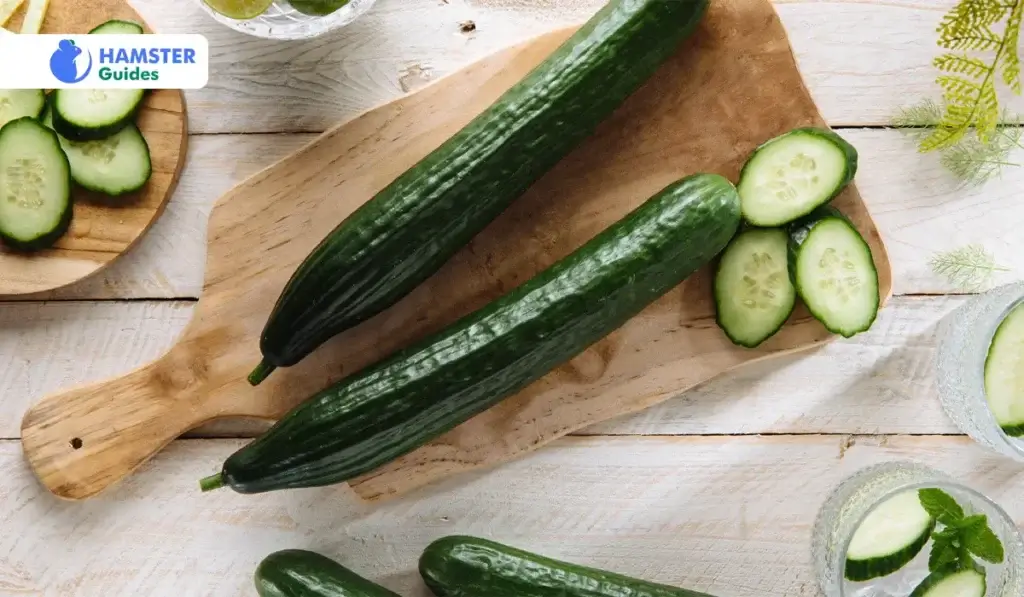
A cucumber’s main ingredient is water; however, it contains comparatively little fat, carbohydrates, or calories. Moreover, it also includes vital minerals and vitamins like manganese, potassium, and vitamins K and C.
| Nutrient | Amount Per 100g | Benefits |
| Calories | 15 kcal | This value of calories gives hamsters low-calorie hydration, particularly during hot times. |
| Water | 95.23 g | Water maintains hydration and promotes general body functions in hamsters. |
| Protein | 0.65 g | Protein helps with muscle growth and regeneration. |
| Carbohydrates | 3.63 g | Carbohydrates give energy for everyday tasks. |
| Fiber | 0.5 g | Dietary fiber promotes gut health, aids digestion, and helps avoid constipation. |
| Sugars | 1.67 g | Sugars give hamsters active, quick energy. |
| Fat | 0.11 g | Fat promotes hair and skin health. |
| Vitamin C | 2.8 mg | Vitamin C strengthens the immune system and encourages healthy hair and skin. |
| Vitamin K | 16.4 μg | Vitamin K promotes bone health and blood clotting. |
| Potassium | 147 mg | Potassium maintains optimal nerve and muscle function and controls fluid balance. |
| Magnesium | 13 mg | Magnesium promotes the health of bones and muscles. |
| Manganese | 0.079 mg | Manganese participates in the processes of metabolism and antioxidant defense. |
| Folate | 7μg | Folate is necessary for the development and division of cells. |
| Calcium | 16 mg | Calcium is vital to the health of bones and teeth. |
Additional Information: Hamsters will seek out shredded paper or hay, two materials that they find in abundance, and use them to construct warm nests in their cages. Giving them things to build nests makes them feel safe and enables them to act more naturally.
The Cucumber Seed Myth
Many generic pet guides warn owners to scoop out the seeds of a cucumber before feeding, claiming they present a choking hazard.
This is a complete myth. Unlike hard, toxic apple seeds or large melon pits, cucumber seeds are incredibly soft, fully digestible, and perfectly safe for a small rodent’s esophagus.
You do not need to waste time hollowing out the vegetable; simply slice a tiny sliver of the whole cucumber and serve it directly.
Can Hamsters Eat Cucumber Skin?
Additionally, the question, “Can hamsters eat cucumber skin?” raises concerns about possible choking hazards and traces of pesticides. However, the peel itself is not poisonous to hamsters, and the use of pesticides in industrial farming may be hazardous.

Consider organic cucumbers to reduce the risk, or cleanse and peel regular-grown cucumbers well before giving them to your furry friend. Cucumber peeling may also be difficult for hamsters to consume and absorb, which raises the possibility of gastrointestinal discomfort or obstructions. It is, therefore, better to cut off the peel and serve the cucumber alone as a treat.
Regarding the question, “Can hamsters eat cucumber skin?” It’s imperative to know the difference between the inner and outer layers of the skin. However, the peel should usually be removed to reduce the risk of choking hazards and pesticide contamination; hamsters can safely eat the thin, fragile skin beneath it.
The outer layer adds a crunchy feel that hamsters find appealing and has substantial nutrients. Merely, just as with any new meal, it’s essential to gradually add cucumber skin to your furry friend’s diet and watch for any adverse reactions.
Can Hamsters Eat Cucumber Leaves?
It is important to remember that cucumber plants are members of the Cucurbitaceae family, including squash and pumpkin; however, consider this question: “Can hamsters eat cucumber leaves?” Although cucumber leaves may not directly harm hamsters, several substances they contain may disrupt their digestive systems or trigger allergic reactions.
As a result, it is advisable to only give your hamster the fleshy portion of the cucumber as a healthy and safe treat rather than the leaves.
Additional Information: Shockingly, hamsters can run at rates of up to eight miles per hour or thirteen kilometers per hour. In the wild, their nimbleness helps them avoid danger.
Different Treats For Hamsters
Adding a range of veggies to your hamster’s diet will spice it up and provide a more nutritious variety. Cucumbers are high in water content and important vitamins, but when combined with other veggies, they offer a well-rounded treat that meets your pet’s nutritional needs and appetite.
Can Hamsters Eat Cucumber and Tomatoes?
One must proceed cautiously when considering, “Can hamsters eat cucumber and tomatoes?” Tomatoes are considered vegetables in culinary contexts, even though they are essentially fruits. Tomatoes can supplement your hamster’s diet with extra vitamins and antioxidants, but you should only give them a small amount because of their acidity and risk of upset stomach.

To avoid choking hazards and facilitate easy digestion, ensure cucumbers and tomatoes are provided in small, manageable pieces after thoroughly cleaning.
Related Resource: Can Hamsters Eat Melon?
The Combination of Cocumber and Carrots
“Can hamsters eat cucumber and carrots?” Cucumbers and carrots are generally safe for hamsters to consume in moderation. The crisp, vitamin-rich carrots complement the cucumbers’ moisturizing properties. Because of their elevated sugar content, it is crucial to restrict the quantity of carrots provided to avoid weight gain and dental problems in hamsters.

Including a range of veggies, such as tomatoes, cucumbers, and carrots, can provide your hamster with a healthy, balanced treat that promotes its general health and well-being. To customize your hamster’s diet to its preferences, try various combinations and pay attention to its inclinations.
To guarantee your pet has a joyful and healthy eating experience, gradually introduce new foods and watch for any adverse reactions.
Pro Tip: To preserve your hamsters’ comfort and well-being, keep their habitat consistently between 65-75 F., and keep their cage away from drafts and direct sunlight.
The Concerns for Cucumber that Leads To Health Issues
To keep your hamster healthy and happy, research the possible hazards of giving it cucumbers. Cucumbers may seem delicious and pleasant, but appropriate pet care requires knowing the potential risks.

We explore the concerns of providing hamsters with cucumbers, including choking hazards, upset stomachs, and pesticide exposure.
By being aware of these concerns, you may prevent these problems from occurring and ensure your pet has a safe and pleasurable dining experience.
Related Resource: Can Hamsters Eat Garlic?
Pesticide Exposure
If you give your hamster commercially farmed cucumbers, it may be exposed to pesticides. Cucumbers are frequently treated with insecticides during production to protect them from pests and illnesses.

However, if your hamster consumes these substances, it may become poisoned or experience other health problems. When feasible, choose organic cucumbers to reduce your pesticide exposure, and thoroughly wash commercially cultivated cucumbers before giving them to your hamster.
TThe Danger of Water Overload
Hamsters originate from arid, dry climates and their gastrointestinal tracts are biologically adapted to extract trace amounts of moisture from dry seeds.
Because a cucumber is 95% water, feeding them a large slice is the equivalent of a human drinking gallons of water in a single sitting.
This sudden flood of liquid completely washes out the healthy microbiome in their gut, leading instantly to explosive diarrhea and a deadly bacterial condition known as Wet Tail. You must restrict their intake to a piece no larger than your pinky fingernail once a week.
Allergic Reactions
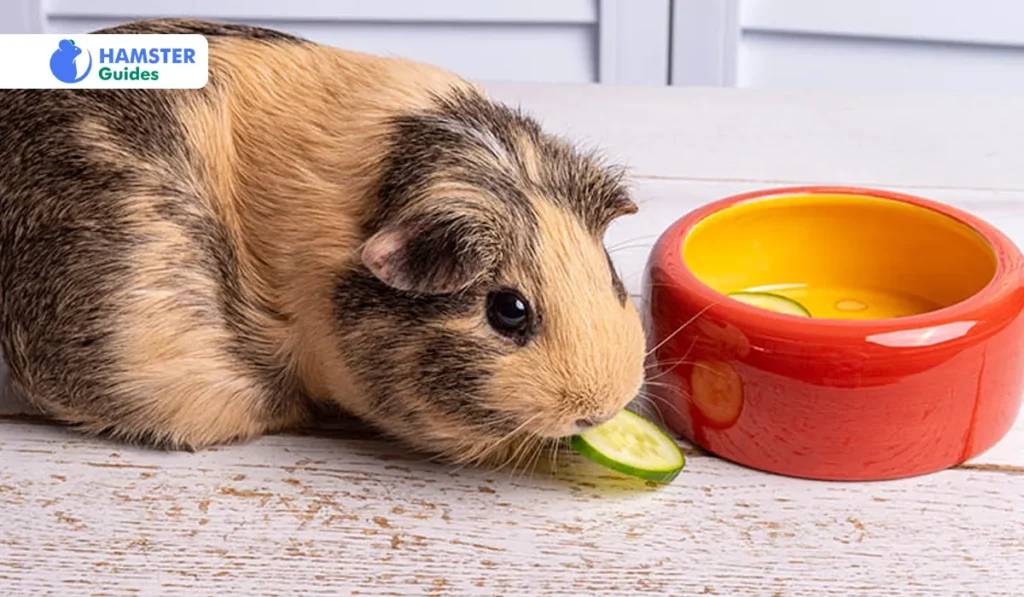
However, although they are uncommon, hamsters may be allergic to or sensitive to cucumbers. Itching, swelling, or respiratory distress are some of the symptoms of an allergic reaction.
If your hamster starts exhibiting strange symptoms after you feed it cucumbers, stop feeding it and seek advice from a veterinarian.
Choking Hazard
The possibility of choking is one of the main dangers of giving cucumbers to hamsters. Cucumbers can be a choking hazard for smaller hamster breeds or tend to eat quickly if not chopped into tiny, bite-sized pieces.
This is especially true for smaller hamster types or ones that eat quickly. Always cut cucumber slices into little bits before giving them to your hamster to reduce the risk.
Related Resource: Can Hamsters Eat Raisins?
Developing a Nutritious Diet For Hamsters
Creating wholesome food is essential for your hamster’s general health and welfare. We will look at a few ways to make a balanced food that meets your hamster’s nutritional requirements.

In my years of raising various hamster breeds, I have found that cucumber is the absolute best way to keep a pet hydrated during an intense summer heatwave, especially if they are ignoring their water bottle.
However, I always rigorously wash the dark green skin before serving. The peel contains the highest concentration of beneficial fiber, which actually helps bind their stool and counteract the massive water content of the inner flesh.
The Final Words
Wrapping up this blog to give these cherished creatures the best care possible requires an awareness of the complexities of hamster nutrition, including the advantages and disadvantages of feeding cucumbers. However, cucumbers can provide hamsters with vital nutrients and hydration, but it is essential to be aware of risks of choking hazards, upset stomachs, pesticide exposure, and allergic reactions.
You may contribute to a balanced diet that promotes your hamster’s health and well-being by giving cucumbers in moderation and in addition to a variety of other nutrient-dense foods. You and your pet can have many happy and healthy years together if you provide the proper care and meet their nutritional needs.



Leave a Reply