

How Long Can Hamsters Go Without Water?
Hamsters can become seriously dehydrated within 24 hours without water and may die within 48–72 hours, depending on species, ambient temperature, and health status. No hamster should ever be left without a functioning water source.
Quick facts:
If your hamster is dehydrated now: offer water immediately; if unresponsive or unable to drink, go to a vet today planning trips and ensuring the overall well-being of your little companion.
- Daily water need: average 8.5 mL per 100 g body weight (males ~5 mL/100 g; females ~14 mL/100 g — Fitts & St. Dennis, 1981, Nutrient Requirements of Laboratory Animals, NCBI)
- First dehydration signs: appear within 12–24 hours, dry gums, lethargy, sunken eyes, reduced skin elasticity
- Critical difference from food: hamsters hoard food and can draw on cached supplies for days. They have no equivalent water-storage mechanism. Water failure kills faster than food failure.
- Most common hidden danger: a sipper bottle that looks full but has an airlock, your hamster is thirsty while the bottle appears untouched
How Much Water Does a Hamster Actually Need?
Hamsters drink small volumes, but missing even one day’s supply causes measurable harm. The most precise data comes from peer-reviewed laboratory research:
Species-specific daily water intake (per 100 g body weight):
| Species | Sex | Daily intake (mL/100 g BW) | Source |
|---|---|---|---|
| Golden (Syrian) | Male | 5 mL | Fitts & St. Dennis, 1981 |
| Golden (Syrian) | Female | 14 mL | Fitts & St. Dennis, 1981 |
| Chinese | Male | 11.4 mL | Thompson, 1971 |
| Chinese | Female | 12.9 mL | Thompson, 1971 |
| All species (average) | — | 8.5 mL | NCBI, Nutrient Requirements of Laboratory Animals, 4th ed. |
What this means in practice:
- A 150 g Syrian male needs roughly 7–8 mL per day
- A 150 g Syrian female needs roughly 20–21 mL per day
- A 50 g Roborovski needs roughly 4–5 mL per day, tiny in volume, but proportionally just as critical
Females consistently require nearly three times more water than males of the same species. If you have a female hamster, do not use male intake figures to judge whether she is drinking enough.
Water needs increase with higher ambient temperatures, dry-pelleted diets, pregnancy, lactation, and illness. They decrease slightly if the diet is rich in fresh vegetables.
Note on sweat glands: Hamsters do not have functional sweat glands, which means they cannot cool themselves by sweating. Water still plays a critical role in kidney function, digestion, circulation, and joint lubrication, dehydration rapidly impairs all of these.
How Long Can Hamsters Go Without Water?
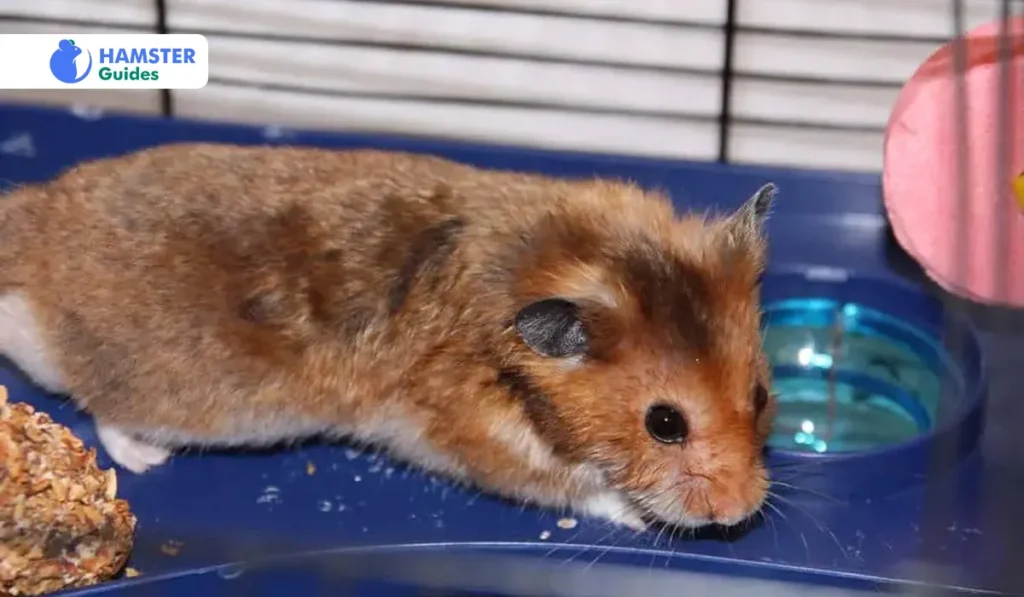
The direct answer: most hamsters show early dehydration signs within 12–24 hours and face life-threatening dehydration within 48–72 hours of losing water access.
This timeline is not a safe target, it is the outer edge of survival under ideal conditions (cool room, healthy adult, pelleted diet). In summer, in a warm room, or in a sick or elderly hamster, the window is shorter.
Why the “3–4 days” figure you see elsewhere is wrong for water: The 3–4 day figure applies to food deprivation in hamsters that can draw on cached food. Water deprivation is physiologically different. There is no water-storage mechanism in a hamster. The peer-reviewed NCBI guidance and veterinary husbandry protocols do not support 3–4 days for water.
By species — survival window without water:
| Species | Body weight range | Clinical dehydration onset | Life-threatening risk |
|---|---|---|---|
| Syrian (Golden) | 100–200 g | Within 24 hours | 48–72 hours |
| Dwarf (Campbell’s, Winter White) | 30–50 g | Within 12–24 hours* | 48–72 hours |
| Roborovski | 15–30 g | Within 12–24 hours* | 48–72 hours |
| Chinese | 30–45 g | Within 24 hours | 48–72 hours |
*Smaller body mass means smaller absolute fluid reserves, so dwarf species reach critical dehydration faster in terms of hours, even though the percentage-loss threshold is similar.
A note on torpor: Research by Ibuka & Fukumura (1997, Physiol Behav) found that unpredictable water deprivation significantly increases the probability of torpor (false hibernation) in Syrian hamsters. A dehydrated hamster may enter a torpor-like state that looks like death. If you find your hamster cold and unresponsive and there has been any chance of water interruption, warm them slowly and contact a vet immediately, do not assume they have died.
Related Resource: Can Hamsters Eat Crackers?
How Long Can Robo Hamsters Go Without Water?
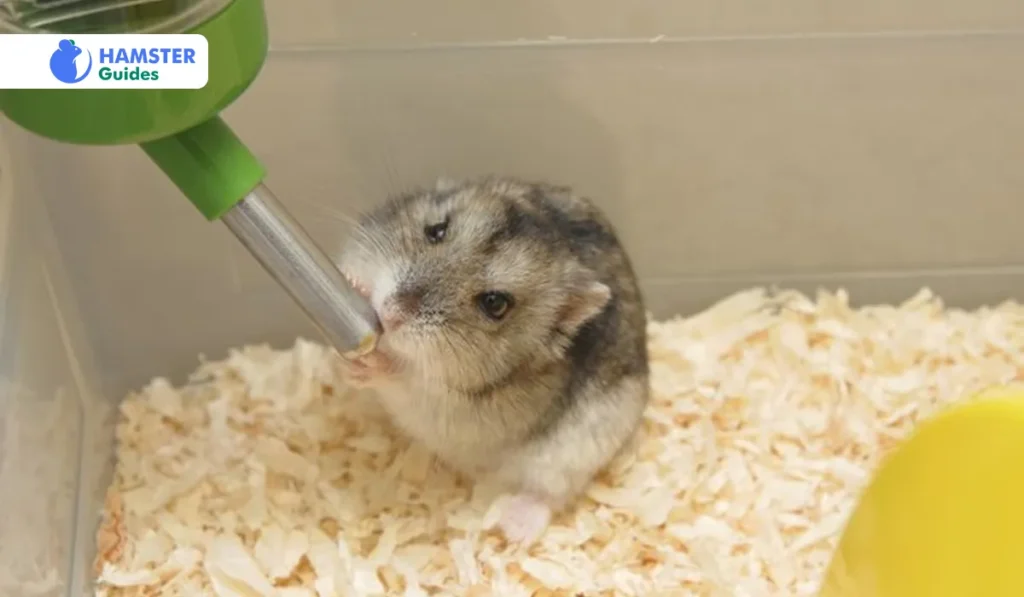
Roborovski hamsters, also known as robo hamsters or dessert hamsters, are fast and the smallest hamster of all the breeds. They can survive for a day without water; however, ensure that they are provided with easy access to water to prevent dehydration and health issues.
For instance, if you are planning a trip, arrange for someone to care for your hamster and ensure they have access to water.
Additional Information: Remember that water should be added to hamsters’ food in addition to the water bottle, such as by adding fresh fruits or lettuce.
Factors That Affect How Quickly a Hamster Dehydrates
These variables shift the timeline significantly. Know them before you travel or make any change to your hamster’s environment.
Age: Young hamsters (under 3 months) and seniors (over 18 months) have less physiological reserve. Their kidneys are less efficient at concentrating urine, so they lose water faster.
Health status: Any illness, respiratory infection, wet tail, diabetes, accelerates fluid loss. A sick hamster may already be dehydrated before you notice symptoms.
Ambient temperature: At room temperature (18–22°C / 64–72°F), the 48–72 hour window applies. Above 25°C (77°F), the risk window shrinks substantially. Never place a hamster’s cage in direct sunlight or near a heat source.
Diet: A diet of dry pellets only means the hamster gets no moisture from food. A hamster eating cucumber (96% water) or lettuce (96% water) has some supplemental hydration — but this is a buffer, not a replacement for a working water bottle.
Pregnancy and lactation: Pregnant and nursing females have dramatically elevated water needs. Dehydration during pregnancy can cause miscarriage and threaten the mother’s life. Daily water checks are non-negotiable for breeding females.
Bottle failure: This is the most underappreciated risk factor. A sipper bottle can look completely full while delivering zero water due to an airlock in the tube. Check your bottle is working, not just full, every day (see Hydration Tips below).
A Fun Fact: Hamsters do not need baths with water; they groom themselves using their paws and salvia. Attempting to wash a hamster with water can lead to illness, as wet hamsters are at risk of catching a cold.
What Dehydration Does to a Hamster’s Body
Dehydration is not just thirst. In small mammals, fluid loss triggers a cascade of organ dysfunction that moves quickly to irreversible harm.
Kidneys: The kidneys are the first organ to suffer. They concentrate urine as dehydration begins, then — if fluid is not restored, cell damage sets in. Chronic sub-clinical dehydration (a hamster always slightly short of water) is a leading cause of kidney disease in older hamsters.
Heart and circulation: Blood volume drops with fluid loss, forcing the heart to work harder to maintain pressure. In a 150 g animal, a few millilitres of fluid loss is proportionally significant.
Digestion: Without adequate fluid, the gastrointestinal tract slows or stops. Constipation, gastrointestinal stasis, and bloating can follow within hours.
Body temperature: Hamsters cannot sweat. In warm environments, dehydration removes their only remaining mechanism for managing core temperature, leading to rapid hyperthermia (heatstroke).
Immune function: Dehydration suppresses immune response, making hamsters acutely vulnerable to bacterial infections — including wet tail (proliferative ileitis), which itself causes further dehydration through diarrhoea.
Pregnancy: Dehydration in a pregnant hamster can cause foetal loss and is life-threatening to the dam. Nursing mothers require extra water to produce milk.
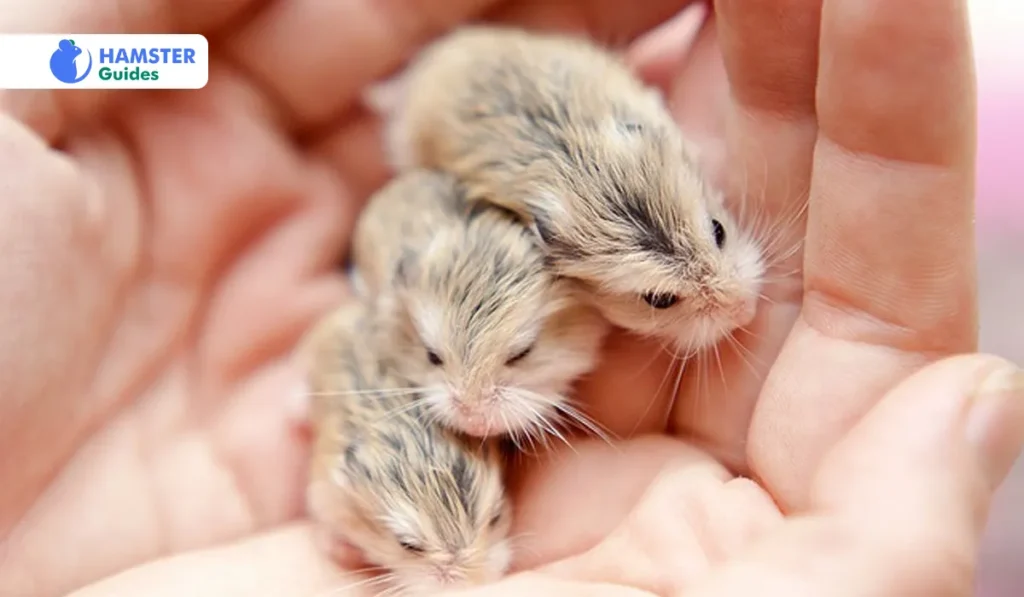
If you are a new pet owner wondering, “How long can my hamster go without water?” Remember that Your hamster is quite vulnerable to dehydration and will not survive more than a day or two without water.
Even after a few hours of activity, they become dehydrated without access to water in their living enclosure. Here are some serious risks that come along with dehydration.
Complications of dehydration
Dehydration raises body temperature, strains the heart and kidneys, and impairs digestion and immune function; pregnant and very young or old hamsters are especially vulnerable. Prevention is far easier and cheaper than emergency care: reliable water, suitable temperature (avoid heat), and daily checks.
Related Resource: Do Hamsters Live in The Wild?
Signs Your Hamster Is Dehydrated
The earlier you catch dehydration, the easier it is to treat. Check for these signs if your hamster has had any disruption to water access, or if the bottle looks suspiciously full and untouched.
Early signs (12–24 hours of water loss):
- Drinking more urgently if water is restored (bolus drinking)
- Slightly sunken eyes
- Reduced activity level
- Less frequent urination, dry, compact droppings rather than normal firm pellets
Moderate signs (24–48 hours):
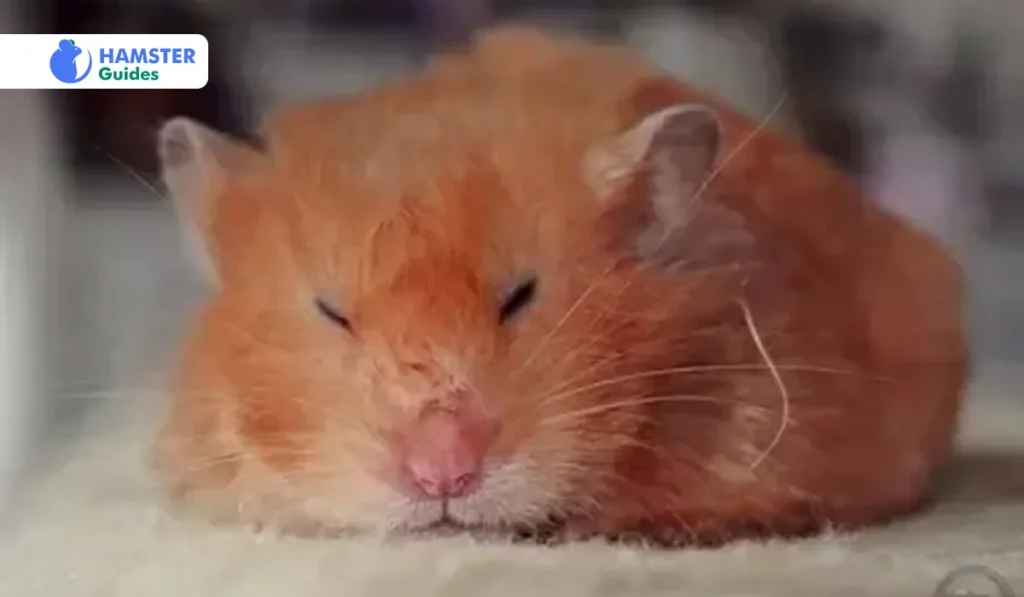
- Sunken, dry-looking eyes — one of the most reliable visual signs
- Dry or sticky gums — gently lift the lip; healthy gums are moist and pink
- Lethargy — the hamster does not respond to being approached or gently touched
- Loss of appetite — food is ignored
- Weight loss — a scale check will show a drop of a few grams
The skin-turgor (tent) test — how to do it: Gently pinch a small fold of skin on the scruff of the neck or between the shoulder blades, then release. In a well-hydrated hamster, the skin snaps back immediately. In a dehydrated hamster, the skin stays “tented” (stands up) for one second or more before slowly returning. The longer the tent persists, the more severe the dehydration.
Important: The skin-turgor test can give false negatives in obese hamsters (fat replaces subcutaneous fluid and maintains skin elasticity despite dehydration). Do not rely on it alone — assess gums and behaviour together.
Severe signs — go to a vet immediately:
- Skin tent persists for 2+ seconds or does not flatten at all
- Eyes are not just sunken but look dull or glazed
- The hamster cannot hold itself upright
- Unconscious or in a torpor-like state
- Has not urinated (no wet spot or fresh droppings in 12+ hours)
Related Resource: Can Hamsters Eat Pomegranate?
What to Do If Your Hamster Is Dehydrated Right Now
Step 1 — Restore water access. Place fresh water in a clean bowl next to the hamster (easier to access than a sipper nozzle for a weak animal). Use room-temperature water, not cold.
Step 2 — Offer diluted oral rehydration fluid. Mix one part unflavoured Pedialyte (or equivalent oral rehydration salt solution) with one part water. Use a 1 mL syringe to drip 0.5 mL into the corner of the hamster’s mouth every 30–60 minutes. Do not force fluid into an unconscious animal — aspiration risk.
Step 3 — Keep the hamster warm and calm. Dehydrated hamsters are hypothermia-prone. Place a warm (not hot) heat pad on the lowest setting under one half of the cage so the hamster can move off it.
Step 4 — Go to the vet if:
- The hamster cannot or will not drink on its own within 1–2 hours
- The skin tent does not improve after 2–3 hours of fluid access
- The hamster is unconscious, convulsing, or in a torpor-like state
- Diarrhoea is present (fluid loss is ongoing)
- You suspect wet tail — this is a veterinary emergency, not a “wait and see” situation
A vet can administer subcutaneous fluids (injected under the skin), which rehydrate significantly faster than oral intake alone. This is often the difference between recovery and organ failure in severe cases.
How to Make Sure Your Hamster Always Has Water
Choose and maintain the right bottle
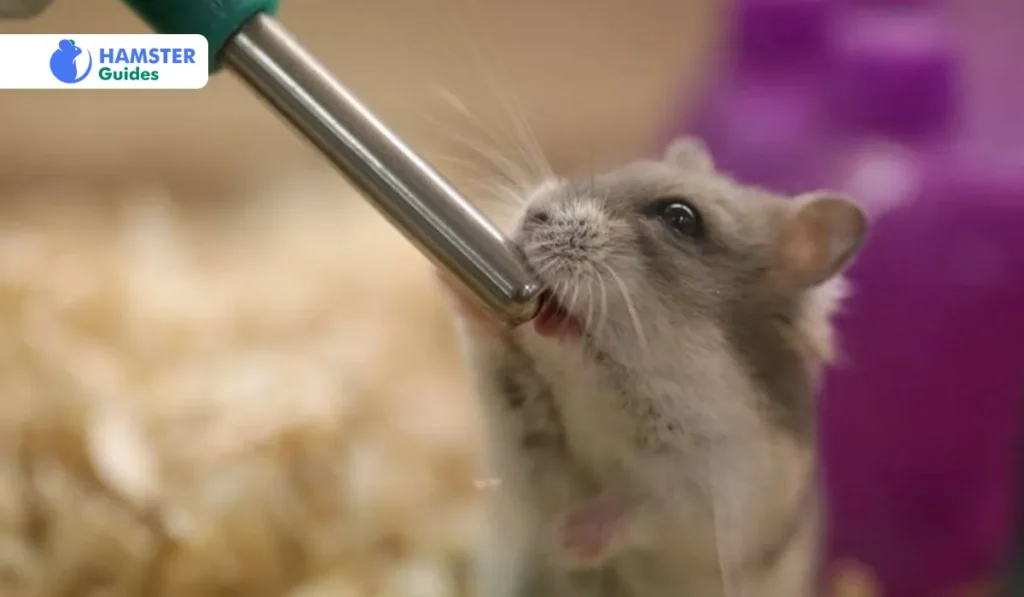
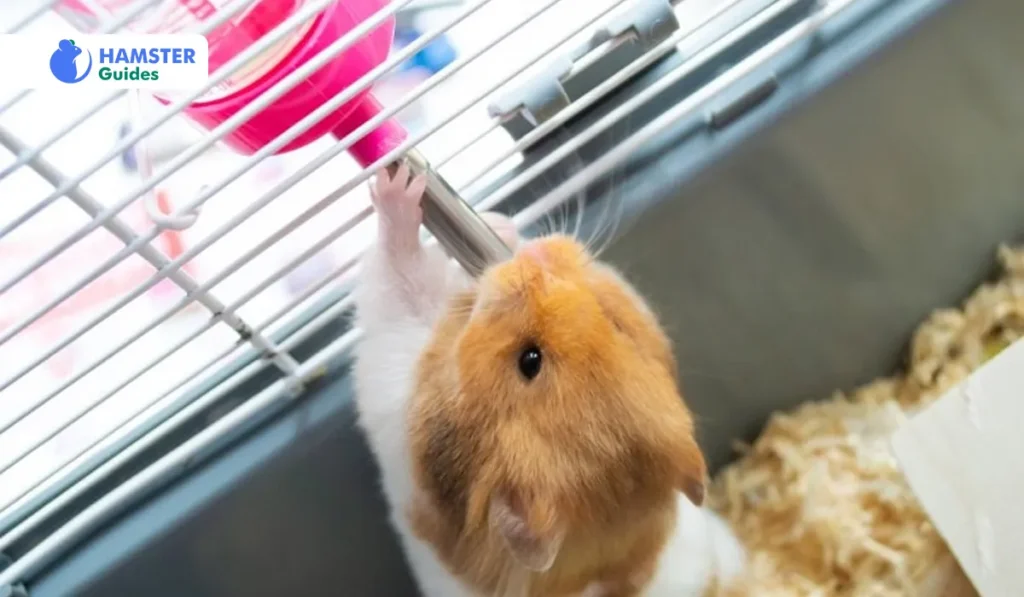
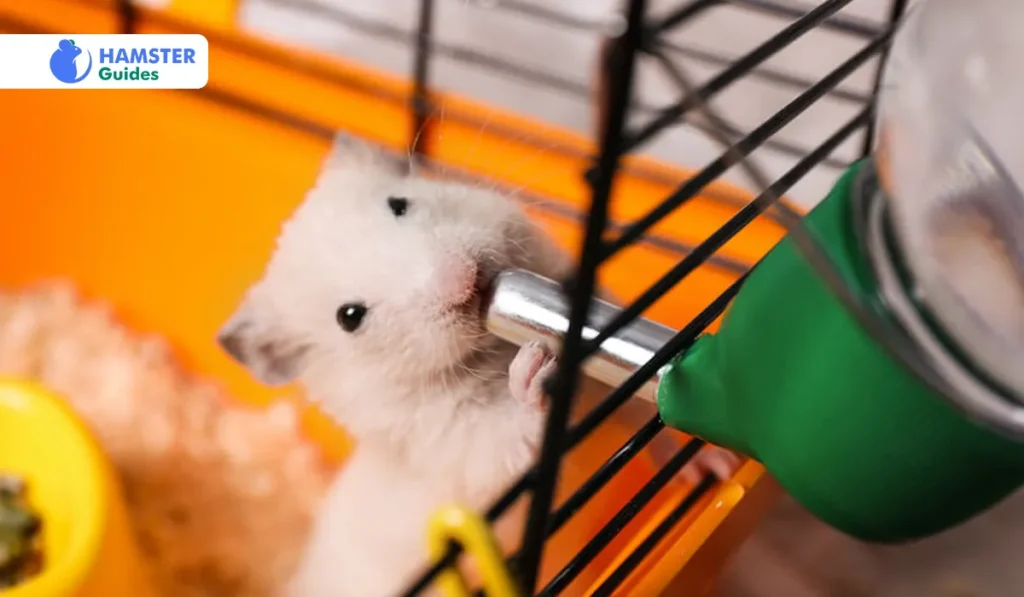
A sipper bottle is safer than a bowl (bowls tip, get contaminated by bedding, and become a drowning risk for young hamsters). Use a bottle with a stainless steel sipper tube — plastic tubes scratch, harbour bacteria, and fail more often.
Daily bottle check — do all three:
- Check the water level has dropped since yesterday. If the level has not moved at all, suspect an airlock.
- Test the flow by tapping the ball bearing with your finger. Water should appear within one or two taps.
- Check the nozzle for bedding, food debris, or algae growth that can block the ball bearing.
The airlock problem: A full bottle can deliver zero water if air pressure builds inside, preventing flow. This happens most often when a bottle is refilled while cold (cold water expands as it warms). If you suspect an airlock, remove the bottle, shake it firmly, and re-test. If the problem recurs, replace the bottle.
Wash the bottle with warm water and mild soap every 3–4 days. Rinse thoroughly — soap residue is toxic to hamsters. Replace bottles every 3–6 months or when scratches appear on the inside.
Use a backup
Always run two water bottles simultaneously. This single habit prevents most accidental dehydration deaths. If one fails — blocked nozzle, cracked bottle, airlock — the second is already there.
Supplement with water-rich foods (as a buffer, not a replacement)
These foods add hydration and enrichment but must not be treated as a substitute for a working bottle:
| Food | Water content | Safe serving size |
|---|---|---|
| Cucumber | 96% | 1 cm cube, 2–3×/week |
| Lettuce (romaine) | 96% | Thumbnail-sized piece |
| Zucchini | 95% | 1 cm cube |
| Celery | 95% | Small strip |
| Watermelon (seedless) | 91% | Pea-sized piece |
| Strawberry | 91% | ¼ strawberry |
Remove fresh food after 4 hours. Rotting produce in a cage causes bacterial illness and does not count as hydration.
Avoid drinks and foods that increase urination
High-sugar fruits (grapes, banana, mango, cherries), sugary yoghurt treats, and fruit juices cause osmotic diuresis — the body pulls water into the gut and then excretes it, leaving the hamster more dehydrated than before. Limit these strictly.
How much water to leave if you go away overnight
For a 150–200 g Syrian hamster: one full 100 mL bottle should cover 3–5 days of drinking. However, bottle failure can occur at any time. Do not leave any hamster more than 24 hours without a human check.
For absences longer than 24 hours: arrange a sitter, or board your hamster with a vet or professional pet-sitter. Leave written instructions specifying the bottle-check steps above.
Can tap water be used?
In most UK and US urban areas, tap water is safe for hamsters. If your tap water is very high in chlorine (strong smell or taste), use a filtered or briefly boiled-and-cooled water. Distilled water long-term can deplete mineral intake. Do not give flavoured water, vitamin water, or any sweetened liquid
Related Resource: How To Take Care Of A Hamster?
Summary: The Rules That Keep a Hamster Safe
- Never leave a hamster alone for more than 24 hours without a trusted person checking water function.
- Dehydration begins within 24 hours. It becomes life-threatening within 48–72 hours. There is no safe “buffer period.”
- Run two water bottles at all times. Test them daily — a full bottle is not proof of a working bottle.
- The skin-turgor test is your fastest at-home dehydration check. Pinch the scruff; if it tents for more than one second, act immediately.
- A dehydrated hamster needs a vet. Home oral rehydration is a bridge, not a cure for moderate-to-severe dehydration.


Leave a Reply