

How Long Can Hamsters Go Without Food?
A healthy hamster with hoarded food reserves can survive 3 to 4 days without a food refill. Without any reserves at all, the window drops to 2 to 3 days. Water is a separate and more urgent risk covered in its own section below. Never leave a hamster without access to either.
Essential Hamster Food Facts:
- Any absence over 48 hours requires a human to check in
- Hamsters are natural hoarders and cache food throughout their cage
- Smaller species have faster metabolisms and shorter survival windows
- Fresh food spoils within 4 to 6 hours and should never be left as an emergency store
- Dry pellets are the only safe food to leave during absences
Nutritional Needs of Hamsters
Hamsters are omnivores. They need a varied diet covering protein, fats, carbohydrates, vitamins, and minerals to maintain their fast metabolism and immune function.
| Nutrient | Function | Dietary Sources |
|---|---|---|
| Protein | Builds and repairs muscle and tissue | Insects, boiled egg white, seeds, nuts |
| Fats | Energy storage and cell structure | Nuts, seeds, fatty whole foods |
| Carbohydrates | Fuel for daily activity | Pellets, grains, vegetables |
| Vitamins | Metabolic regulation and immunity | Fresh vegetables, fortified pellets |
| Minerals | Bone health and enzyme function | Leafy greens, cereals, vegetables |
A hamster’s metabolism runs fast. They consume small amounts continuously throughout their active hours rather than eating one or two large meals. This is why consistent food access matters more than portion size.

How Long Can Hamsters Go Without Food?
The answer depends on one factor most articles miss entirely: hamsters hoard food.
In the wild, Syrian hamsters carry up to half their body weight in food in their cheek pouches and store it in burrow chambers. Pet hamsters do exactly the same. They stuff pellets into corners, under bedding, and inside hideaways. This cached supply is why a pre-stocked hamster can often manage 3 to 4 days without a fresh refill, not the 2 to 3 days most sources state.
The survival window depends on several variables:
| Scenario | Estimated Survival Window |
|---|---|
| Healthy adult with hoarded reserves | 3 to 4 days |
| Healthy adult with no reserves | 2 to 3 days |
| Young pup or ill hamster | Under 24 hours |
| Dwarf species with no reserves | 1 to 2 days |
| Roborovski with no reserves | Under 24 hours in some cases |
“Owners often overestimate how long their hamster can safely go without food because they see the animal looking active and assume it has been eating. What they do not realize is that the hamster may have been depleting hidden reserves for days before any visible decline appears.”
Dr. Norma Young, RCVS Veterinary Surgeon, Royal Veterinary College

Water: A Separate and More Urgent Risk
Food and water carry different risk levels. This section covers water completely so the rest of the article can stay focused on food.
A hamster requires an average of 8.5 mL of water per 100g of body weight per day (Fitts and St. Dennis, NCBI, 1981). A 150g Syrian hamster needs roughly 13 mL daily. Without it, critical dehydration sets in within 24 hours.
The silent emergency: a clogged sipper tube. A bottle that looks full can be completely blocked by a food particle or mineral deposit. The hamster gets nothing while the bottle appears fine. Always press the ball bearing tip to confirm water is flowing freely before any absence.
Signs of dehydration to check on return:
- Skin tent test: pinch the skin at the back of the neck. It should snap back immediately. Slow return means dehydration
- Sunken or dull eyes
- Dry or sticky gums
- Lethargy and no response to normal stimuli
If dehydrated: Offer water via a dropper, 1 to 2 mL at a time slowly. Contact an exotic-pet vet if the hamster does not improve within 2 hours.
Hoarding Behavior: Why It Changes the Calculation
When you fill your hamster’s food dish, you are not seeing everything it eats. Hamsters move food from the dish into hidden caches throughout the cage. This hardwired survival behavior is called food hoarding and it is documented across all hamster species.
This is clinically relevant for any owner planning an absence:
- Load the cage with extra dry pellets before leaving. The hamster will cache the excess and draw on it while you are away
- An empty-looking dish does not mean the hamster is starving. It may be eating from hidden stores
- Never leave fresh food as an emergency supply. Vegetables, fruit, and protein treats spoil within 4 to 6 hours and can cause bacterial illness
Research note: Common hamsters without accessible food stores hibernated at significantly higher rates and reached lower core body temperatures during torpor than those with cached food available (NCBI, PMC5486536, 2017). Food hoarding is not just behavioral. It directly affects physiological stability.
Torpor: A Warning Sign, Not a Safety Net
Torpor is an involuntary state of reduced metabolism triggered by cold temperatures (below 65°F / 18°C), insufficient light, or food and water scarcity. It is not hibernation, and it is not safe.
During torpor, a hamster’s heart rate can drop from a normal 200 to 500 beats per minute to as low as 3 to 20 beats per minute (Biology Insights, 2025). The body becomes stiff and cold. Many owners mistake a torpid hamster for a dead one.
Why torpor is dangerous, not helpful:
- A torpid hamster cannot eat or drink, accelerating dehydration
- Prolonged torpor leads to hypothermia and organ failure
- Pet hamsters are not adapted to true hibernation and cannot safely sustain torpor for extended periods (Woodgreen Pets Charity; Vets4Pets)
If your hamster is in torpor:
- Move the cage to a warm room (65 to 75°F)
- Hold the hamster gently in your cupped, warm hands
- Do not use direct heat sources like hot water bottles or heat lamps
- Once the hamster stirs, offer water immediately via a syringe or dropper
- If unresponsive after 30 minutes of warming, contact an exotic-pet vet
⚠️ A pet hamster entering torpor is a welfare emergency, not a natural cycle. It signals that temperature, light, food, or water needs are not being met.
Related Resource: Can Hamsters Eat Blueberries?
Survival Window by Species: Clarified
| Species | Body Size | Metabolism | Estimated Window Without Food |
|---|---|---|---|
| Syrian (Golden) Hamster | Largest | Moderate | 2 to 4 days (with hoarded reserves) |
| Campbell’s Dwarf | Small | Fast | 1 to 2 days |
| Winter White Dwarf | Small | Fast | 1 to 2 days |
| Roborovski Dwarf | Tiny | Very fast | Under 24 hours in some cases |
| Chinese Hamster | Small | Fast | 1 to 2 days |
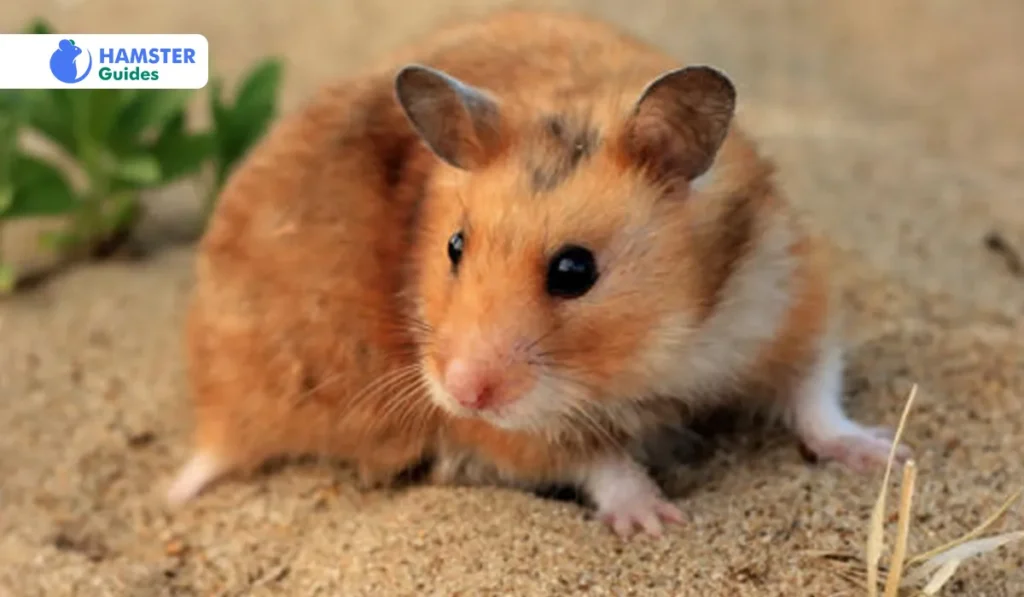
Key principle: The smaller the hamster, the faster its metabolism, and the shorter its survival window. Roborovski hamsters are the smallest and most metabolically demanding — they should never be left without food for more than 24 hours.
What Happens Inside the Body When Food Runs Out
A timeline of food deprivation:
| Timeframe | What Happens |
|---|---|
| 0 to 12 hours | Normal. Hamster draws on cached food and stored glycogen |
| 12 to 24 hours | Blood glucose begins falling. Activity reduces noticeably |
| 24 to 48 hours | Muscle breakdown begins. Immune function declines. Significant lethargy |
| 48 to 72 hours | Organ stress begins. Risk of irreversible damage, especially in small species |
| 72 hours and beyond | Critical. Organ failure risk increases sharply. Mortality likely without intervention |
Age and health status compress this timeline significantly. A young pup or a hamster with an existing illness can reach organ stress within 24 hours.
Related Resource: Can Hamsters Eat Peaches?
Factors That Affect How Long a Hamster Can Survive Without Food
Age: Young hamsters carry minimal body fat reserves and deteriorate faster than healthy adults. Elderly hamsters over 18 months have reduced organ resilience.
Species: Dwarf species have faster metabolisms than Syrian hamsters and reach critical states sooner. Roborovskis are the highest-risk species for short absences.
Health status: A hamster with an existing condition such as diabetes, wet tail, or respiratory infection has reduced tolerance for any food or water scarcity.
Body fat reserves: Heavier, well-nourished hamsters can mobilize fatty acids as an alternative fuel source during food restriction (ScienceDirect, 2003). Leaner hamsters cannibalize muscle tissue sooner.
Hoarded food supply: A hamster that was fed generously in the days before an absence has a meaningfully larger safety buffer than one whose dish was running low.
Environmental temperature: Warmer temperatures increase metabolic rate and deplete energy reserves faster. Cooler temperatures risk triggering torpor.
Related Resource: Can Hamsters Eat Raisins?
Leaving Your Hamster Alone: A Vet-Backed Protocol
Under 24 hours: Generally Safe:
- Ensure the water bottle is full and the sipper tube is flowing freely
- Leave dry pellets topped up
- No other action required for a healthy adult hamster
24 to 48 hours: Prepare Carefully:
- Top up dry pellets generously (the hamster will hoard excess)
- Check and double-check the water bottle for leaks and flow
- Remove any fresh food, as it will spoil within 4 to 6 hours
- Add a small slice of cucumber or carrot as a secondary hydration source — these remain safe for up to 12 hours
Over 48 hours: Arrange Care:
Do not leave a hamster unattended for more than 48 hours. Arrange one of the following:
| Option | Best For | Notes |
|---|---|---|
| Trusted friend or family sitter | Any absence | Provide written care instructions |
| Small-animal boarding (vet clinic or specialist) | Absences over 3 days | Confirm exotic-pet experience |
| Automatic pellet feeder | Emergency only — not recommended | Cannot dispense water reliably |
Before you leave: Final Checklist:
- Water bottle full and sipper tube confirmed flowing
- Dry pellets topped up generously
- Fresh food removed from the cage
- Temperature in the room is between 65 and 75°F (18 to 24°C)
- The cage is out of direct sunlight and away from drafts
- A trusted person has your vet’s contact number
Signs of Food or Water Deprivation: What to Check When You Return
When you return after any absence of 24 hours or more, check these before anything else:
Physical signs of dehydration:
- Skin tent test: gently pinch the skin at the back of the neck — in a hydrated hamster it snaps back immediately; in a dehydrated hamster it stays tented or returns slowly
- Sunken or dull eyes
- Dry or tacky gums
- Lethargy and failure to respond to normal stimuli
- Dark, concentrated urine or no urination visible in the cage
Signs of food deprivation:
- Visible weight loss (ribs or spine palpable through the coat)
- Hunched posture
- Weakness or unsteady movement
- Failure to groom
If you observe any of these: Offer water immediately via a dropper or syringe (1 to 2 mL at a time, slowly). Do not force feed. Contact an exotic-pet vet if the hamster does not improve within 2 hours of being offered water and food.
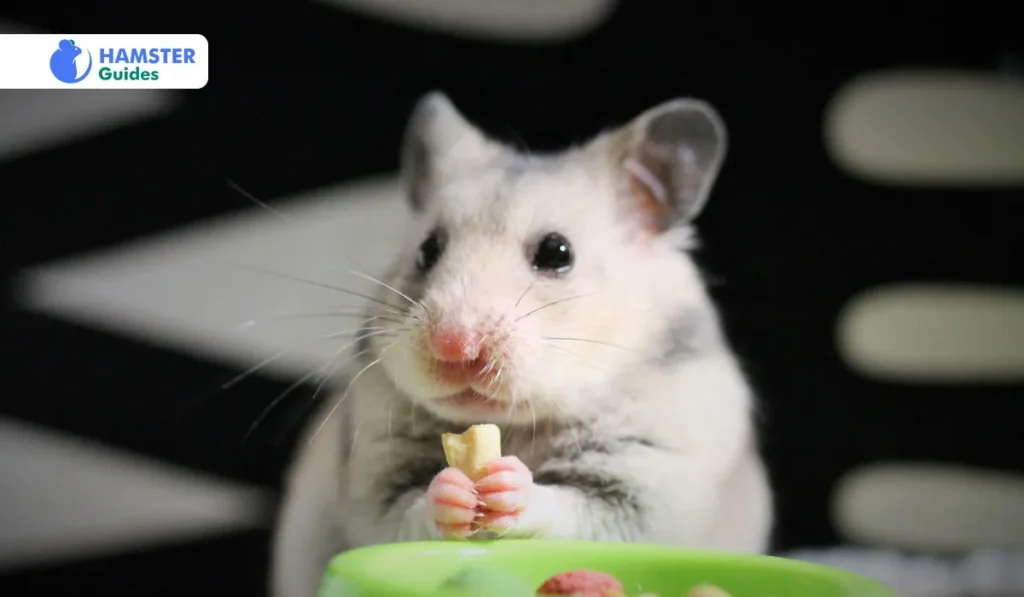
Summary: The Rules That Actually Matter
On food: A healthy hamster with reserves can manage 3 to 4 days. Without reserves, 2 to 3 days. Smaller species have far less margin. Young, old, and ill hamsters have almost none.
On hoarding: Always top up dry pellets generously before any absence. The hamster will cache the excess and draw on it when needed.
On torpor: If your hamster appears cold, stiff, and unresponsive, do not assume it has died. Warm it gradually in your hands and offer water when it stirs. Contact a vet if it does not revive within 30 minutes.
On absences: 24 hours is manageable with preparation. 48 hours is the absolute maximum without a human checking in. Anything beyond that requires arranged care.
“The question I hear most from hamster owners before a trip is how long their hamster can go without food. My answer is always the same: do not calculate how long it can survive without you. Calculate how to make sure it does not have to.”
Dr. Norma Young, RCVS Veterinary Surgeon, Royal Veterinary College


Leave a Reply