
Can Hamsters Have Pineapple?
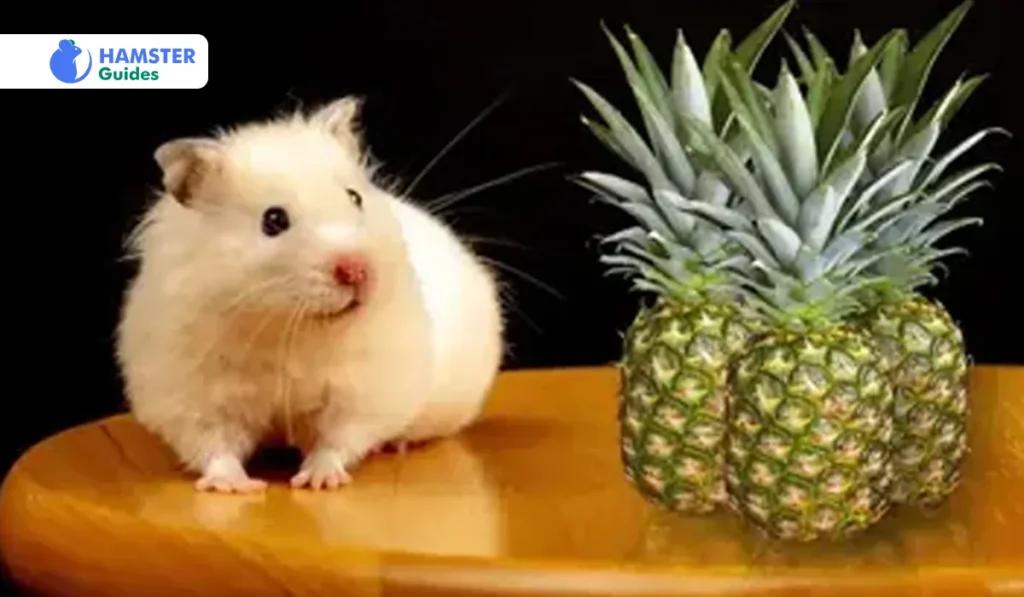
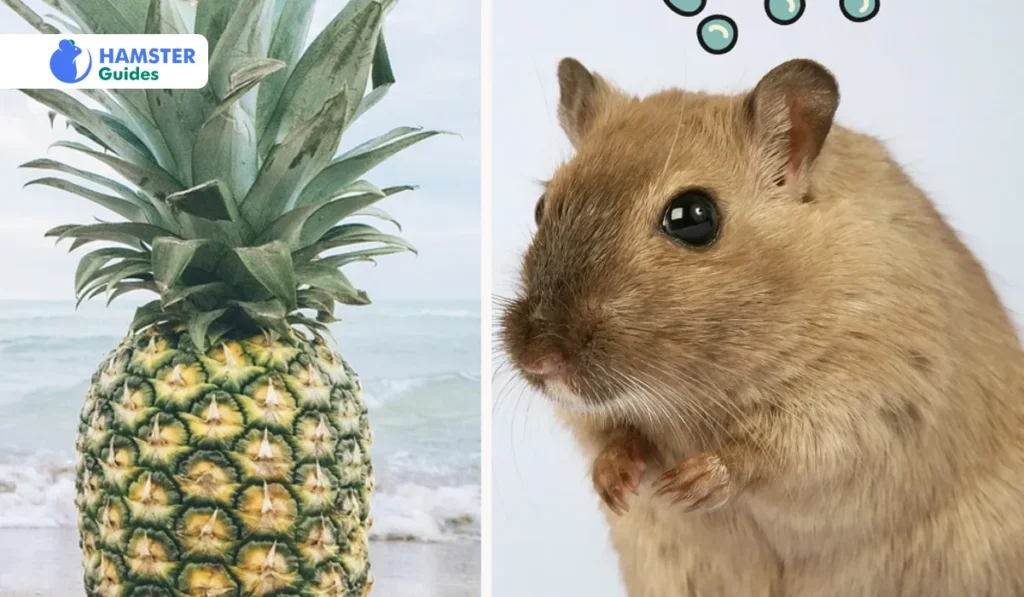
Yes, hamsters can eat pineapple, but only fresh fruit in very small amounts. A paw-sized piece (about 1cm cube) once per week is the safe limit.
Pineapple isn’t toxic, but its high sugar and acidity can cause stomach upset, diarrhea, and weight gain if overfed. The key is treating it as an occasional snack, not a dietary staple.
Let’s break down exactly how to serve pineapple safely, what risks to watch for, and better fruit alternatives.
Why Pineapple Needs Careful Portioning
Hamsters have tiny, sensitive digestive systems. While pineapple packs vitamins and hydration, it also contains natural sugars and acids that can overwhelm your pet.
One cup of pineapple (what humans eat) has 16 grams of sugar. For a hamster weighing 30-50 grams, even a few extra pieces can spike blood sugar dangerously.
That’s why portion control matters more than the fruit’s benefits.
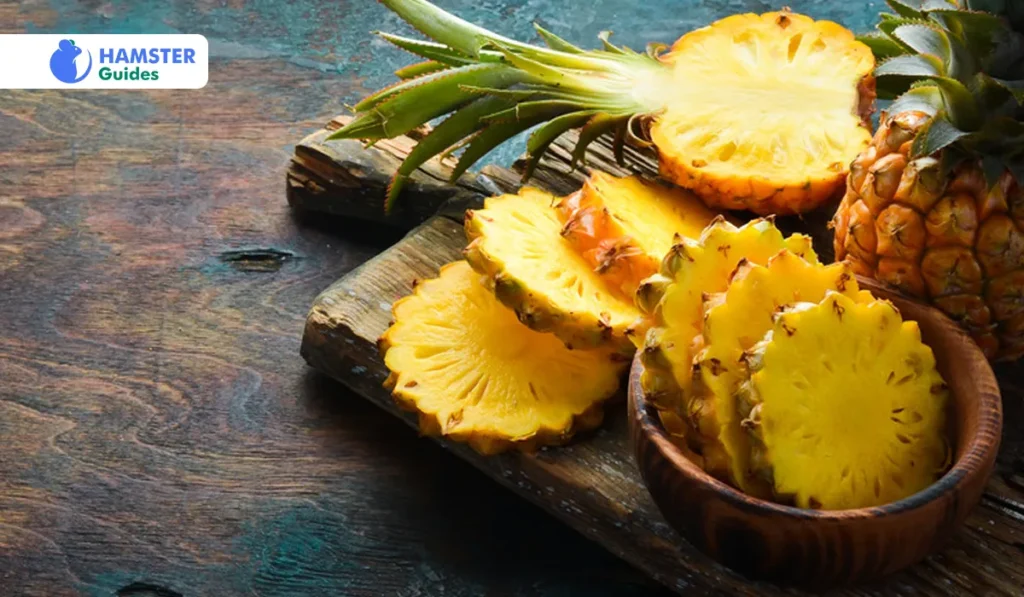
What Makes Pineapple Good for Hamsters
In tiny servings, pineapple offers:
- Vitamin C – Boosts immune function (though hamsters produce their own vitamin C, extra helps during stress or illness)
- Fiber – Supports healthy digestion and prevents constipation
- Bromelain – An enzyme that reduces inflammation, especially helpful for older hamsters with joint stiffness
- Hydration – High water content keeps your hamster refreshed
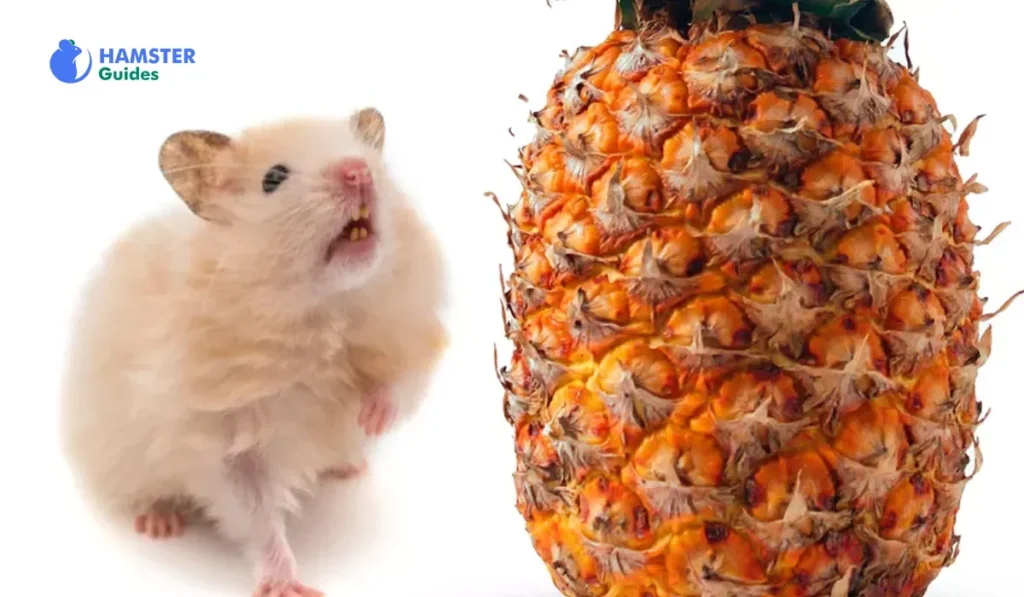
But these benefits only apply when fed correctly. Overdo it, and the risks outweigh the rewards. Here is an overview of the critical nutrients found in pineapple.
| Nutrient | Amount |
| Calories | 83 calories |
| Carbohydrates | 22 grams |
| Dietary Fiber | 2.3 grams |
| Sugars | 16.3 grams |
| Protein | 0.9 grams |
| Fat | 0.2 grams |
| Vitamin C | 78.9 milligrams |
| Vitamin A | 3 micrograms |
| Folate | 29 micrograms |
| Vitamin B6 | 0.1 milligrams |
| Thiamine (Vitamin B1) | 0.1 milligrams |
| Riboflavin (Vitamin B2) | 0.03 milligrams |
| Niacin (Vitamin B3) | 0.5 milligrams |
| Pantothenic Acid (B5) | 0.2 milligrams |
| Vitamin K | 1 microgram |
| Calcium | 21 milligrams |
| Iron | 0.3 milligrams |
| Magnesium | 20 milligrams |
| Phosphorus | 13 milligrams |
| Potassium | 180 milligrams |
| Sodium | 2 milligrams |
| Manganese | 1.5 milligrams |
| Copper | 0.1 milligrams |
| Zinc | 0.1 milligram |
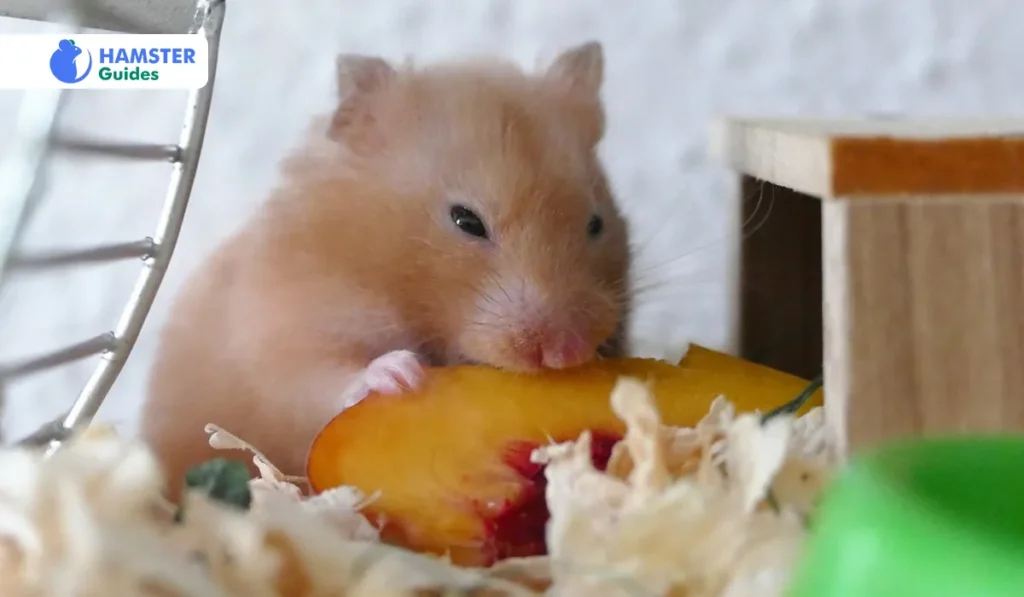
The Sugar Problem: Why Too Much Pineapple Hurts Hamsters
Feeding pineapple too often or in large pieces causes serious health issues:
- Obesity – Natural sugars add up fast in small bodies. Syrian hamsters are especially prone to weight gain from sweet treats.
- Digestive upset – Pineapple’s acidity irritates stomach lining. Watch for diarrhea or decreased appetite after feeding.
- Cheek pouch sores – Hamsters store food in their cheeks. Acidic pineapple sitting in pouches can cause painful inflammation or ulcers.
- Nutritional imbalance – If your hamster fills up on pineapple, they’ll skip their pellet food, missing essential nutrients.
- Diabetes risk – Dwarf hamsters are genetically prone to diabetes. Sugary fruits like pineapple accelerate this condition.
Monitor your hamster closely after their first pineapple serving. Any behavior changes or soft droppings mean pineapple isn’t right for them.
Related Resource: Can Hamsters Eat Coconut?
The Right Way to Prepare Pineapple
Follow these steps every time:
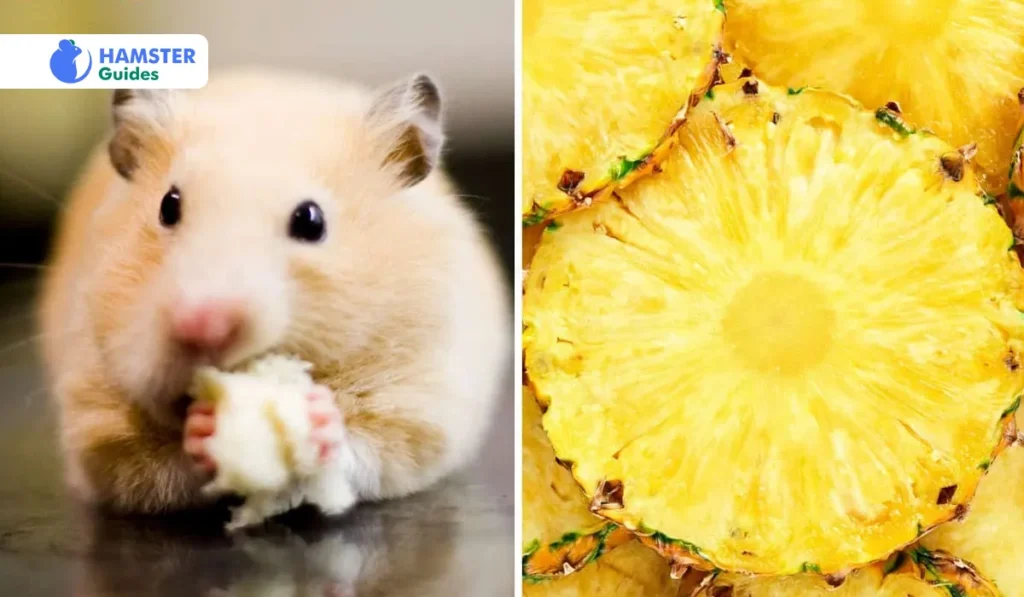
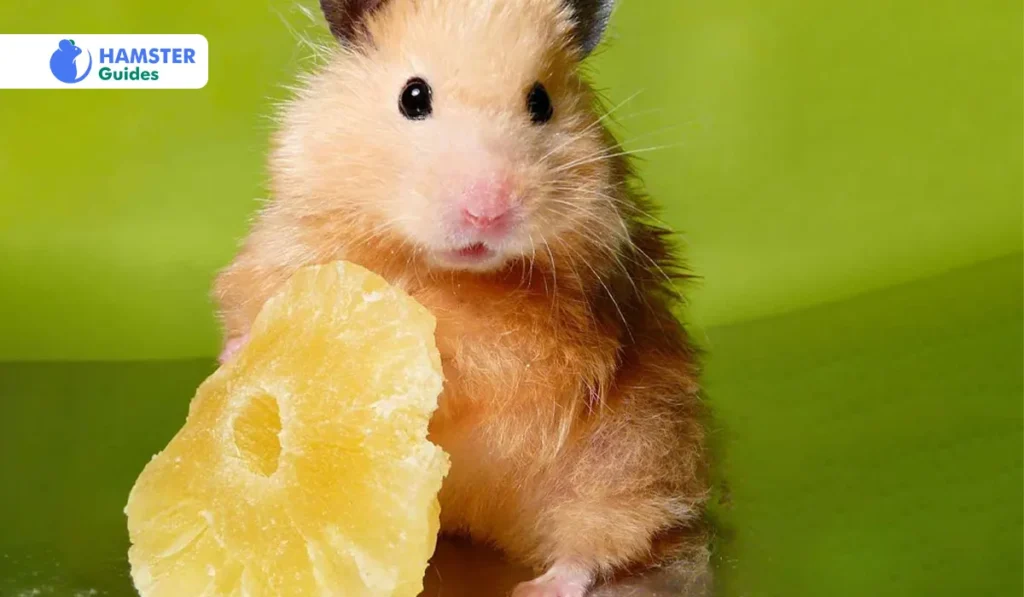
1. Choose fresh, ripe fruit – Avoid canned (loaded with syrup), dried (concentrated sugar), or frozen (serve only after thawing to room temperature).
2. Wash thoroughly – Remove pesticide residue from the skin before cutting.
3. Remove all skin and core – The spiky exterior and tough core can puncture cheek pouches or cause choking.
4. Cut paw-sized pieces – Roughly 1cm cube. If introducing pineapple for the first time, start with half that size.
5. Serve on a clean dish – Never place fruit directly on bedding where it can mold.
6. Remove uneaten pieces within 2-3 hours – Hamsters hoard food in hidden spots. Check these areas daily because rotting pineapple breeds bacteria.
How Often Can Hamsters Eat Pineapple?
Once per week maximum. Never on the same day as other sugary treats like berries or banana.
If your hamster is new to fresh food, wait until they’ve tried milder options like cucumber or spinach first. This prevents digestive shock from introducing sugar and acid together.
Dwarf hamsters need even stricter limits, consider once every 10 days due to diabetes sensitivity.
Can Hamsters Have Pineapple Juice?
No. Never offer pineapple juice, even diluted.
Juice concentrates all the sugar without any fiber to slow digestion. This causes blood sugar spikes and severe diarrhea.
Stick to fresh water for hydration. If your hamster seems dehydrated, consult a vet rather than trying fruit juice remedies.
Related Resource: Can Hamsters Eat Cauliflower
Warning Signs Your Hamster Can’t Tolerate Pineapple
Stop feeding pineapple immediately if you notice:
- Wet droppings or diarrhea within 12 hours of eating.
- Decreased activity or lethargy.
- Swollen cheeks or pawing at mouth (indicates pouch irritation).
- Ignoring regular food in favor of hoarded pineapple.
- Rapid weight gain over 2-3 weeks.
Some hamsters simply don’t process acidic fruits well. That’s completely normal, offer safer alternatives instead.
Pro Advice: A balanced and carefully portioned diet is essential for your hamster’s well-being. If you are still determining the amount of pineapple or any other food your hamster can consume, consult a veterinarian specializing in small pets.
Better Fruit Options for Regular Treats
If you want to treat your hamster more often than once weekly, try these lower-acid, lower-sugar options:
- Blueberries – Antioxidant-rich, 1-2 berries per serving
- Apple (seedless) – Remove skin, serve small chunks
- Strawberries – Low acid, good for dwarf hamsters
- Pear – Soft texture, easy to digest
- Banana – Only tiny amounts (very high sugar)
Rotate fruits weekly. Never feed the same fruit two days in a row to maintain nutritional balance.
Related Resource: Can Hamsters Eat Sugar Snap Peas?
The Final Words
Pineapple works as an occasional treat when served correctly, fresh fruit only, paw-sized portions, once weekly maximum.
Watch your hamster’s reaction closely during their first few servings. Some hamsters love it, others ignore it completely, and a few can’t tolerate the acidity at all.
If pineapple doesn’t work for your pet, there’s no shortage of safer fruit alternatives. The goal is variety without digestive risk.
When in doubt, less is always better than more.


Leave a Reply