

Do Hamsters Eat Their Babies?
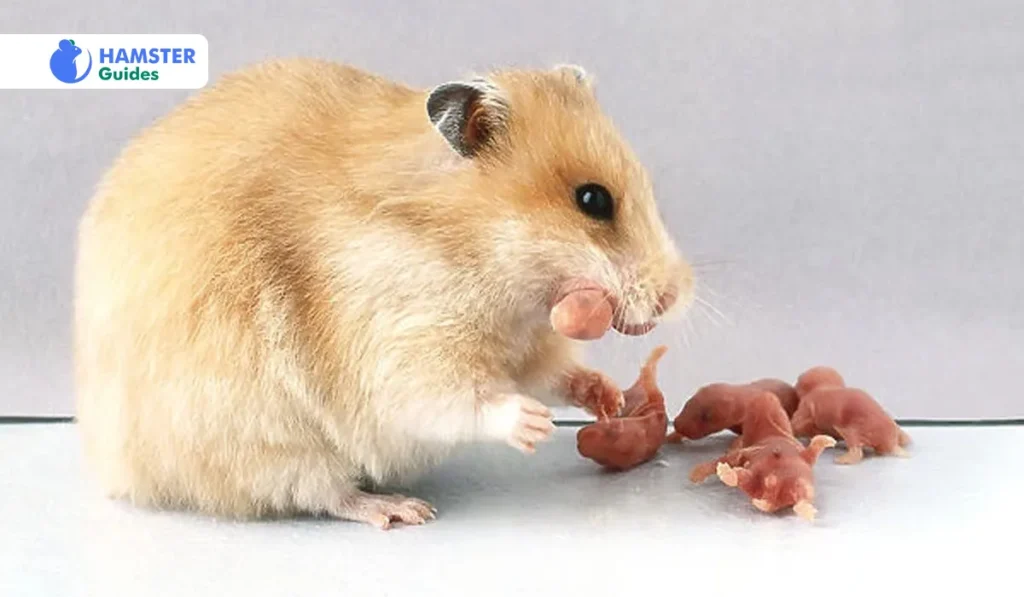
Yes, hamsters can eat their babies, a behavior known as filial cannibalism. While it may seem shocking, it is a natural survival response rather than an act of cruelty.
This behavior is most commonly triggered by severe stress, poor nutrition, disturbances after birth, the presence of a dead or weak pup, unfamiliar scents from excessive handling, or a litter that is too large for the mother to support.
By providing a quiet environment, a balanced diet, and minimal disturbance during the first few weeks after birth, owners can significantly reduce the risk of cannibalism.
What is filial cannibalism in hamsters?
Filial cannibalism is the consumption of offspring by a parent. In hamsters, it is classified as a form of maternal infanticide, a regulated reproductive behavior documented extensively in rodent maternal behavior research.
Unlike predatory cannibalism, filial cannibalism in hamsters functions as a litter-management and resource-allocation strategy.
Hamster Reproductive Basics You Need to Know
Understanding the reproductive cycle helps you predict risk windows.
| Species | Sexual Maturity | Litter Size (avg) | Gestation |
|---|---|---|---|
| Syrian Hamster | 4 to 6 weeks | 6 to 10 pups | 15 to 16 days |
| Dwarf (Winter White / Campbell’s) | 3 to 4 weeks | 4 to 6 pups | 18 to 21 days |
| Roborovski | 4 to 5 weeks | 3 to 6 pups | 23 to 30 days |
Newborns are born hairless, blind, and completely dependent. They cannot regulate body temperature. This vulnerability is exactly why the mother’s stress response is so powerful in the first 72 hours after birth.

Signs of pregnancy to watch for: weight gain in the back half of the body, nesting behavior, hoarding more food than usual, visible nipples, and reduced activity in the final days.
Additional Information: After birth, newborns are unable to walk, listen, or see. Even though it sounds wild, these same newborns will reach sexual maturity in four weeks.
Why Do Hamsters Eat Their Babies? The Real Causes
Hamster cannibalism has a clinical name: filial infanticide. It is estimated that up to 20% of female hamsters engage in this behavior depending on stress level, diet, and genetic predisposition (Christophe Garon citing veterinary sources). First-time mothers are at significantly higher risk due to lack of maternal experience.
The causes break down into six clear categories:

The Primary Cause: Stress
Stress is the leading trigger. Hamsters are solitary prey animals with an acute threat-detection system. When that system is activated during or after birth, the mother may cannibalize pups as a last-resort survival response.
Common stress triggers:
- Loud or sudden noises near the cage
- Frequent disturbances or being watched by people or other pets
- Overcrowded housing
- A dirty or unfamiliar cage environment
- Handling the pups before 3 weeks of age
- The presence of a male hamster in the same enclosure
Critical window: The first 72 hours after birth are the highest-risk period. The mother is hormonally primed, exhausted, and extremely sensitive to any perceived threat. Do not approach the cage during this window unless absolutely necessary.
“In my clinical experience, the first 72 hours postpartum are when maternal cannibalism is most likely to occur. The mother’s stress-response system is at its most sensitive immediately after birth. Any disturbance during this window, noise, handling, a change in the cage environment, can override her maternal bonding instinct entirely.” — Dr. Norma Young, RCVS-accredited Veterinary Surgeon

Stress can result from a lack of exercise in hamsters. If you don’t have a hamster wheel, purchase one for your cute little rodents. It also helps keep your hamster stress-free and occupied.
⚠️ Vet Advice: Do not clean the cage, move furniture inside it, or touch the bedding for at least 7 to 10 days after birth. Even the scent of a recently cleaned cage can disorient a new mother and raise her stress response.
Litter Size Overload
When a litter is too large for the mother to nurse adequately, she may cull weaker pups to direct resources to the strongest. This is cold evolutionary math, not cruelty.
Syrian hamsters average 6 to 10 pups per litter, but can occasionally deliver up to 20. A mother with 12 nipples nursing 18 pups will face a genuine resource deficit. Cannibalism in this context is a regulatory mechanism that increases the survival odds of the remaining litter.
What to do: Do not intervene by attempting to remove pups yourself unless a pup is visibly dead. Human scent on a live pup is a stronger cannibalism trigger than litter-size stress alone.
Dead Pup in the Nest
A mother hamster will almost always consume a dead pup to keep the nest hygienic. This is called necrophagy and is biologically normal. The risk is that she may not stop there.
If you find a dead pup:
- Disinfect the area only after the litter is fully weaned, not before
- Use a spoon or gloves (never bare hands) to remove it immediately
- Do not disturb the rest of the nest during removal
What is necrophagy in hamsters?
Necrophagy is the consumption of dead animals. In the context of rodent maternal behavior, a mother hamster practicing necrophagy on a dead pup is performing nest hygiene, removing a decomposing body that could attract predators or spread pathogenic bacteria.
This is biologically distinct from filial cannibalism of live pups and is considered a normal, adaptive behavior in small mammals.

Accidental Death During Nesting
New and inexperienced mothers sometimes accidentally suffocate pups while nesting, rolling over them, or carrying them in their cheek pouches to relocate them.
If the pup dies in transit, the mother will typically eat the body to clear the nest. This is not predatory behavior but a nest-hygiene response.
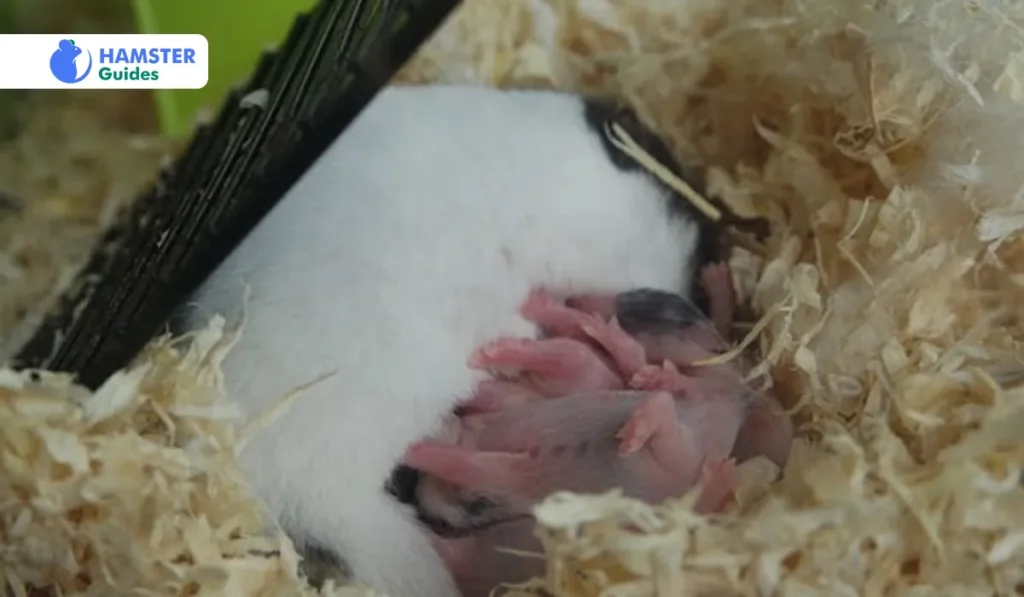
Nutritional Deficiency: The Research-Backed Cause Nobody Talks About
This is the most underreported cause, and it has peer-reviewed science behind it.
A landmark study by Mathilde Tissier and colleagues at the University of Strasbourg found that hamsters fed an exclusively corn-based diet became severely cannibalistic. Only 5% of pups whose mothers ate only corn survived to weaning, compared to 80% of pups whose mothers ate a varied diet of wheat, clover, or insects.
The cause was Vitamin B3 (niacin) deficiency. When researchers gave the corn-fed hamsters a B3 supplement, the cannibalistic behavior stopped entirely and the hamsters returned to normal maternal activity. The corn-fed mothers did not even give birth in the nest, pups were scattered around the cage and then placed on top of corn hoards before being eaten.
“Nutritional deficiency is the most underdiagnosed trigger for maternal cannibalism in pet hamsters. Owners focus on stress and handling, but a mother running on inadequate calories or a diet low in B vitamins cannot physiologically support her litter. Her nervous system is impaired before the pups even arrive.” — Dr. Norma Young, RCVS-accredited Veterinary Surgeon
What this means for pet owners:
Never feed your hamster a diet based primarily on one grain, especially corn-heavy seed mixes. A balanced diet should include:
- High-quality pellets (primary base)
- Fresh vegetables: broccoli, carrot, spinach (small amounts)
- Animal protein sources: boiled egg white, plain cooked chicken (2 to 3 times per week for pregnant/nursing females)
- Occasional seeds and grains as variety, not as the main component
Pregnant and nursing females have significantly elevated energy and protein requirements. Inadequate diet during this period is a direct risk factor for filial cannibalism.
Why does lactation increase cannibalism risk?
Lactation is one of the most energetically expensive physiological states a female mammal can sustain. In Syrian hamsters, nursing a full litter of 8 to 10 pups can require up to 2 to 3 times the caloric intake of a non-pregnant female.
When dietary energy or micronutrients, particularly Vitamin B3 (niacin) and protein, are insufficient to meet this demand, the mother’s nervous system prioritizes her own survival. The result is a suppression of maternal bonding hormones and an activation of resource-conservation behaviors, including cannibalism of weaker pups.
Foreign Scent on the Pups
A mother hamster identifies her pups by scent. If a pup smells unfamiliar, because a human handled it, or because it was moved near a different-smelling substrate, she may reject or cannibalize it.
The truth about touching baby hamsters: Excessive handling or introducing foreign scents can cause stress and trigger cannibalism, but brief contact alone does not automatically doom a pup. The risk is cumulative and scent-intensity dependent.
Rule of thumb: Do not handle pups at all before 3 weeks of age. If you must touch one (to check for injury), rub your hands in the cage bedding first to mask your scent.
“I always tell new owners: the mother doesn’t think in human terms. She thinks in scent. If a pup smells wrong, it is, to her, a foreign object in her nest. The safest rule is no bare-hand contact before three weeks, no exceptions.” — Dr. Norma Young, RCVS-accredited Veterinary Surgeon

Father Hamsters And Their Babies
Male hamsters provide zero parental care and are a documented risk to the litter. Unlike some rodent species, hamster fathers do not bond with offspring. A male left in the cage may see newborns as competition for territory, food, or the female’s attention.
Always separate the male before birth. Move him at least 2 weeks before the due date. Reintroducing him after weaning still carries risk and should be done only with full supervision.

First-Time Mothers: The Highest-Risk Group
Inexperienced mothers are statistically more likely to cannibalize their first litter. Young females having their first litter are more prone to becoming overwhelmed, as a lack of maternal experience is a direct risk factor.
Signs a first-time mother is struggling:
- Pups scattered outside the nest
- Mother ignoring or stepping over pups
- Excessive self-grooming while pups are exposed
- Vocalizations of distress (high-pitched squeaking)
If you observe these signs, do not intervene by touching the pups. Increase food availability, reduce all external disturbance, and monitor from a distance.
“First-time mothers lack the learned behavioral patterns that experienced dams develop. They’re biologically capable of caring for a litter, but cognitively overwhelmed by the demands of simultaneous nursing, nest-building, and threat-monitoring. That overwhelm is what tips them toward infanticide.” Dr. Norma Young, RCVS-accredited Veterinary Surgeon
Role Of A Mother Hamster
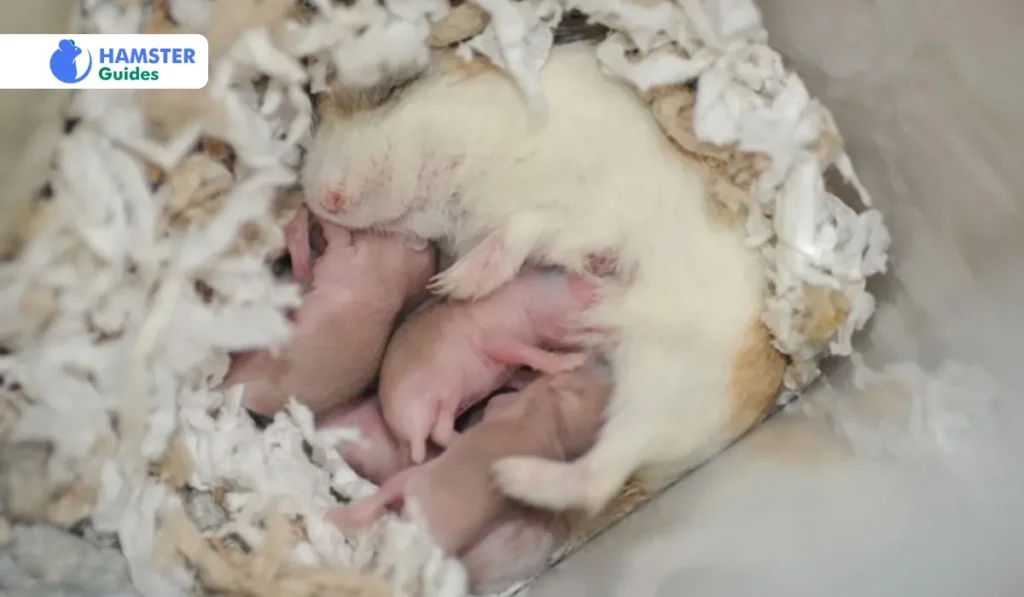
An innate feature of hamster behavior is motherhood. After giving birth, the female takes on the caretaker job with incredible commitment. Mother hamsters are renowned for giving their young careful attention and providing warmth and sustenance.

A mommy hamster gradually helps them transition from milk to solids by introducing nutritious foods. She guards her brood ferociously against threats, remaining watchful and careful the entire way.
Moreover, Motherhood is an essential and inherent role for hamsters, who exhibit steadfast love, tenderness, and protective instincts. Pet owners must honor and encourage this mother attachment by creating a secure and relaxing environment for both.
How to Prevent Hamster Cannibalism: A Vet-Recommended Checklist
Prevention is entirely possible in most cases. These steps address every evidence-based risk factor.
Before Birth (2 to 3 weeks prior):
- Separate the male permanently
- Move mother to her birth cage with familiar bedding (avoid new smells)
- Double her food portions, especially protein
- Add extra nesting material: paper tissue, chemical-free hay
- Ensure cage is at least 24 x 12 inches (larger is better)
- Place cage in a low-traffic, quiet room
At Birth (day 0 to day 7 — do not disturb):
- Do not open the cage unless a dead pup must be removed
- Do not clean or rearrange anything
- Keep other pets and children completely away
- Ensure fresh water and food are available without you needing to reach into the nest area
- No flash photography, no loud music, no sudden movements near the cage
After Birth (day 7 to weaning at 3 to 4 weeks):
- Remove the male only if he was somehow still present
- Begin brief, quiet checks from outside the cage
- Still no handling of pups
- Continue high-protein diet for the mother
| Component | Winter White Hamster | Roborovski Hamster | Syrian Hamster |
| Social Conduct | Social | Social | Alone |
| Minimum Size Of Cage | 45*25 cm | 30*20 cm | 60*30 cm |
| Dealing With Them | Gently deal with them; keep an eye out for signs of stress. | Calmly deal with them. Also, if there’s any sign of stress. | Keep calm when handling your hamster. |
| Minimum Size Of Exercise Wheel | 16.5 cm | 11.5 | 20 cm |
| Diet | Winter white dwarf hamster’s diet consists of fresh veggies and occasionally sweets. | Roborovski hamsters need pallets with smaller sizes. | Syrian hamsters need a well-balanced diet of fresh veggies, treats, and pellets. |
| Maximum Age Of Hamsters | Lifespan of 1.5 to two years. | Maximum age 3 to 3.5 years. | Their maximum age is 2 to 3 years. |
Tips For The Wellbeing Of Your Hamster
Related Post: Are Hamsters Nocturnal?
Breed-Specific Cannibalism Risk
Not all hamster species carry equal risk.
| Species | Cannibalism Risk Level | Notes |
|---|---|---|
| Syrian Hamster | High | More than 75% of Syrian hamster mothers cannibalize a portion of their litter within the first few days postpartum across all observed conditions. |
| Campbell’s Dwarf | Very High | Known to be cannibalistic even without obvious triggers |
| Winter White Dwarf | Moderate | Social species; less isolation stress |
| Roborovski | Low to Moderate | Rarely documented; very small litters |
| Chinese Hamster | Moderate | Sensitive to handling-related scent disruption |
Research on Syrian hamsters shows that shorter day lengths (simulating autumn/winter) are associated with increased cannibalism, particularly of female pups, as mothers appear to selectively adjust litter sex ratios based on perceived environmental conditions. This is a unique adaptation documented in the scientific literature and not driven by stress or diet at all.
When to Call a Vet?
Most cannibalism events are over before you discover them. However, contact your exotic animal vet if:
- The mother has eaten more than 2 or 3 pups with no obvious environmental cause
- The mother is showing signs of illness: lethargy, labored breathing, discharge
- Surviving pups are not nursing after 24 hours
- The mother is injured or showing aggression toward all pups
An exotic vet can assess whether a hormonal imbalance, infection, or nutritional deficiency is driving repeated cannibalism across multiple litters.
“Filial cannibalism in hamsters is not a welfare failure on the owner’s part, it is an evolutionary survival mechanism. What makes it preventable in captivity is that we can remove every one of the triggers that activate it. A well-prepared owner can reduce this risk to near zero.” — Dr. Norma Young, RCVS-accredited Veterinary Surgeon
Summary: What You Need to Remember?
Hamster cannibalism is instinctive, not malicious. Every documented trigger, stress, poor nutrition, foreign scent, dead pups, an oversized litter, a present male, is something a prepared owner can control.
The five most important actions:
- Keep the cage in a quiet room with minimal foot traffic
- Separate the father before birth, not after
- Feed a varied, protein-rich diet throughout pregnancy
- Do not touch pups or clean the cage for the first 10 days
- Remove any dead pups immediately using gloves


Leave a Reply